Ministry of natural resources and environmental protection of the Republic of Belarus Map Republic

BELHYDROMET

Ru Be En
всв
youtube.com telegram viber instagram vk
  • About us
    • Structure
    • History
    • Periodicals
  • Activities
    • Agrohydrometeorology
    • Radiation and Ecology
    • Aviation weather reports
    • Scientific activity
  • Services
    • Requisites
  • Press center
    • News and events
  • Contacts
    • Guidance of Belhydromet
    • Reception
    • Office management department
  • telegram youtube X
  • Ru Be En
  • Блок 3 в 1
Main / Блок 3 в 1

Блок 3 в 1
17.08.2026
Weather chronicle spanning 85 years. Meteorological station Lyntupy
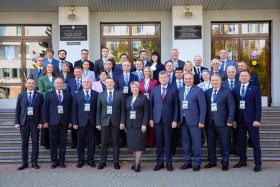
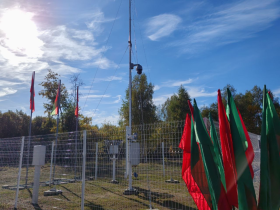
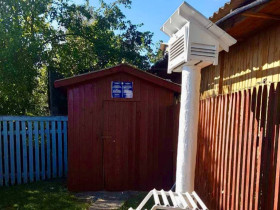
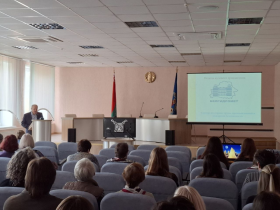
The Lyntupy weather station is a place where every day the story of nature is transformed into precise figures and observations, helping to better understand the climatic features of the region, forecast changes, and preserve valuable meteorological data for science and society. In August 2026, the weather station celebrates its 85th anniversary. The Lyntupy meteorological station is a structural subdivision of the Branch "Vitebskoblgidromet" of Belhydromet, which has been conducting round-the-clock weather observations continuously since 1941 . Over the decades of operation, the work of meteorologists has undergone significant changes. The introduction of modern instruments and equipment, computer technologies, and Internet services has made it possible to substantially improve the methods of conducting observations, processing the obtained data, and promptly transmitting hydrometeorological information to consumers. The range of meteorological parameters observed at the station is very broad: visibility range, cloud height and forms, air temperature and humidity, soil surface temperature, atmospheric pressure and its characteristics, wind speed and direction, amount, type and intensity of precipitation, atmospheric phenomena and radiation background levels. Since the weather station is located near the Belarusian Nuclear Power Plant, observations of radioactive fallout from the atmosphere and airborne aerosols are also conducted. The Lyntupy weather station conducts standard meteorological observations at 8 synoptic intervals and operates under the Category 2 station program. Every 3 hours according to Coordinated Universal Time, the duty meteorologist records all required parameters and enters them into a special logbook; the information is then transmitted in coded form to the Belhydromet data collection center, and subsequently to global weather centers. The Lyntupy weather station is staffed by a team of professionals with impressive experience. The team is headed by Lyudmila Litvinovich, who has devoted 27 years to meteorology. She works alongside four experienced employees: Maria Vershilo ( 34 years of service), Oksana Zubanova ( 32 years of service), Zhanna Litvinovich ( 20 years of service) and Svetlana Blashko ( 18 years of service). Continuous observations of atmospheric phenomena enable meteorologists to promptly record the intensification of phenomena to unfavorable and dangerous thresholds and to transmit storm warnings regarding the strengthening of such phenomena as heavy snow, heavy rain, strong winds, severe hail, etc. One of the main tasks of the meteorological station is to inform the public and enterprises about current and future atmospheric processes, to provide timely warnings of adverse and hazardous weather phenomena, and to supply hydrometeorological information to the mass media. In 2019 , the Lyntupy weather station put into operation an automatic station AMIIS (automated meteorological measuring and information system S-01), which allows meteorological parameters to be obtained on a continuous basis. In addition to meteorological observations, the station also carries out agrometeorological observations and work, which began in April 1962 . Today, this area is overseen by Liliya Antanovich , a Category I agrometeorological engineer who has devoted 24 years to her profession. Thanks to her many years of experience and high qualifications, the continuity and high quality of agrometeorological observations are ensured. The agrometeorological observation program includes: assessment of crop conditions, observations of developmental phases, plant height and density, weed infestation, damage to agricultural crops, and determination of yield structure. During the growing season, at the end of each ten-day period, instrumental determination of soil moisture by layers and determination of grain moisture during grain harvesting are carried out. In winter, the agrometeorologist monitors the temperature at the tillering node depth, soil freezing and thawing, as well as snow cover height on agricultural fields with winter crops. In January and February, the viability of winter grain crops is assessed in the fields with overwintering crops. Over the 85 years of the station's operation, much has changed. The staff has been renewed more than once; however, one thing has remained unchanged – the dedication of the employees to their work. Many of them devoted decades to the station and retired with impressive work records reaching 47 years. A vivid example of loyalty to the profession are the labor veterans Evgenia Zubkova and Yadviga Virshilo . The staff of Belhydromet congratulates the team of the Lyntupy meteorological station on its 85th anniversary! 85 years of continuous work is not just a number — it is thousands of observations and millions of recorded data points. It is daily work that requires precision, responsibility, and genuine dedication. You preserve a unique weather chronicle that serves not only science but also the entire country — helping to plan agricultural work, ensure transport safety, and make important decisions in the economy and social sphere. We thank the entire station staff for their conscientious work, reliability, and commitment to the profession. Deep gratitude to the veterans: your experience and traditions have become the solid foundation on which the station's work is built today. We wish the entire staff of the Lyntupy weather station continued success, stable equipment operation, and, of course, good weather! May your work always be in demand and duly appreciated, and may the station continue to move forward with confidence, combining time-tested methods with the most modern technologies. Information prepared based on materials from the website of the Branch "Vitebskoblhydromet"
14.08.2026
What is the difference between the yellow, orange, and red hazard levels?
Belarus uses a 4 -level color-coded scale (green, yellow, orange, red) to assess weather hazards. It helps to quickly understand how serious the threat is. Green : the weather is not hazardous. Yellow : the weather is potentially hazardous. In some areas (less than 30% of the territory), adverse hydrometeorological phenomena are expected: heavy precipitation, thunderstorms, strong gusty winds, extreme heat/frost, and others. These phenomena are typical for Belarus but may be dangerous for certain types of activities. Orange : the weather poses a real danger. Over most of the country (30% or more of the territory), adverse phenomena are expected, and in some areas (less than 30% of the territory), hazardous hydrometeorological phenomena (very heavy precipitation, very strong winds, large hail, extreme heat/frost, and others) are expected. There is a threat of significant material damage and possible casualties. Red : the weather is very dangerous. Over most of the territory, hazardous hydrometeorological phenomena are expected, which pose a threat to public safety and may cause serious material damage and multiple casualties.   When using the information a reference to Belhydromet is obligatory
14.08.2026
How do meteorologists detect squalls half an hour before they strike and how do they track the lightning-fast development of dangerous convective phenomena (thunderstorms, hail, hurricane-force winds of 25-34 m/s) using a network of modern weather radars?
When convective processes develop, a meteorologist cannot do without analyzing data from satellite monitoring and radar sounding, which make it possible to determine the presence of cumulonimbus clouds, their structure, characteristics – including the temperature of the cloud top – as well as associated convective phenomena (thunderstorms, heavy downpours, squalls). Belarus's radar sounding network includes 5 modern Doppler weather radars (DWRs) installed in Minsk, Brest, Grodno, Vitebsk, and Gomel, with a coverage radius of 200 km each, which allows radar observations to cover virtually the entire territory of our country. The DWRs scan the sky around the clock and make it possible to look inside clouds to detect the birth of hazardous phenomena. With the help of radars, meteorologists can: - monitor the movement of cloud formations and cloud growth in near-real time (every 10 minutes); - detect convective cells (powerful cumulonimbus clouds) associated with thunderstorms, hail, heavy downpours, and squalls. Although squalls are among the most difficult phenomena to forecast, radars provide a crucial advantage – they allow the approach of such convective phenomena to be detected 1-3 hours in advance. On a radar image, a squall appears as a bow-shaped curved band (Bow Echo) or a sharp line with a "ragged" edge. Most often, these are elongated, well-defined bands of extremely high reflectivity (from 45 to 60 dBZ and above), moving in the same direction. The leading edge of such a band is sharp and smooth; it is precisely there that the outflow of cold air occurs, causing the squall. The squall line moves very quickly (up to 60-80 km/h). On DWR imagery, one can see how the arc bends forward, with its center (the apex of the arc) being the most dangerous spot, where the wind is strongest. Having detected such a pattern, the meteorologist understands that near the ground, wind gusts are likely to exceed 25 m/s, and there are grounds for issuing a storm warning for a hazardous hydrometeorological phenomenon. All convective processes develop within minutes. To predict large hail and supercell thunderstorms, meteorologists also look at the height of the cloud top – if it penetrates the tropopause and reaches 12-15 km, then adverse and hazardous hydrometeorological phenomena can be expected. When using the information a reference to Belhydromet is obligatory
13.08.2026
Minister of Natural Resources and Environmental Protection of the Republic of Belarus visited Minsk meteorological station
As part of the ongoing series of inspections of Ministry of Natural Resources facilities, an important visit took place to the Minsk meteorological station — the second stage of a detailed study of Belhydromet's operations. The station was visited by the Minister of Natural Resources and Environmental Protection of the Republic of Belarus, Maksim Lysenko . The Minsk meteorological station operates around the clock: the well-coordinated work of a team of 8 specialists ensures the conduct of all types of necessary observations. During the visit, the head of the agency familiarized himself in detail with the organization of the station's work: he examined the material base and infrastructure of the facility, reviewed operational telegrams and observation data, and analyzed the condition and operational efficiency of the equipment. Particular attention during the inspection was paid to the role of the collected information in forecasting dangerous and adverse hydrometeorological phenomena. A key element of accurate forecasts and timely storm warnings is aerological sounding data. As a member of the World Meteorological Organization (WMO), the Republic of Belarus strictly fulfills its international obligations to conduct meteorological observations, contributing to the global atmospheric monitoring system. Aerological probes record the most important atmospheric parameters — temperature, humidity, pressure, and wind speed — at various altitudes. These data are critical for addressing a number of key tasks: - determining the trajectory and speed of air mass movement; - assessing the instability energy of the atmosphere, which serves as an indicator of the potential danger of extreme hydrometeorological events; - forecasting summer convective phenomena — such as thunderstorms, heavy rainfall, hail, and squalls. Despite their local nature, these phenomena often lead to significant damage, so their early detection is one of the priority tasks of the hydrometeorological service. A highlight of the visit was the Minister's personal participation in the workflow: Maksim Vladimirovich launched a radiosonde with his own hands. This symbolic yet professionally significant step clearly demonstrated the close connection between the agency's leadership and the practical side of meteorologists' work, emphasizing the importance of observations in the overall forecasting system. Based on the results of the inspection, a set of measures will be developed to further improve methods for forecasting dangerous hydrometeorological phenomena. The Minister particularly noted that current approaches require adaptation to modern climatic conditions and growing demands for the speed and accuracy of forecasts. " We need to improve forecast accuracy, expand capabilities, and enhance methods for the early detection of dangerous hydrometeorological phenomena ," emphasized Maksim Lysenko, outlining the key directions for future work. The Minister's visit was not only an assessment of the current state of the meteorological station's operations but also an important impetus for the development of the entire national hydrometeorological support system. Belhydromet will continue its systematic work to improve forecast quality and strengthen the protection of the population and the economy from dangerous hydrometeorological phenomena.
13.08.2026
Why does a summer storm sometimes form in literally 15-20 minutes?
The secret behind the lightning-fast formation of a summer convective storm lies in extreme atmospheric instability. In summer, the surface in Belarus rapidly warms up to +25 +30°C . The air near the ground becomes hot and light, creating tremendous buoyancy. The heated air begins to rise rapidly at a speed of 5-10 m/s (sometimes up to 30 m/s). Encountering colder air at higher altitudes, it quickly cools and condenses (water vapor turns into water droplets), and the formation of cumulonimbus clouds begins. This condensation releases latent heat, which further warms the air from below. A positive feedback loop is created: the higher it rises, the faster it expands and draws in new portions of moisture. Within 15-20 minutes, the heated air manages to race from the ground to the stratosphere (over 11 km). As soon as it reaches the upper boundary, the air flow can no longer rise further, spreads out to the sides, and the "anvil" of the convective cloud forms. The peak of its intensity occurs precisely at this moment. Such cells are so small ( 5-15 km wide) that numerical models cannot detect them. Meteorologists can easily forecast that there is a high probability of powerful cumulonimbus cloud development and, consequently, the formation of associated adverse and hazardous hydrometeorological phenomena (thunderstorms, squalls, heavy downpours, hail), but the exact time and location of their formation are determined using weather radar in real time – 20-40 minutes in advance. When using the information a reference to Belhydromet is obligatory
13.08.2026
On August 21, 2026, a meeting of the Anti-Corruption Commission will be held in the Belhydromet conference hall
At 9:00 on August 21, 2026 (Friday), a meeting of the Anti-Corruption Commission will be held in the Belhydromet conference hall (4th floor).
13.08.2026
Development of ecotourism: a new vector of cooperation for Belhydromet
On August 13, 2026, the Minsk meteorological station served as the venue for an important meeting dedicated to exploring the potential of Belhydromet in the field of ecotourism development. Representatives of the Economics Committee of the Minsk City Executive Committee, led by Deputy Chairperson Tatyana Selivonik , visited the station to familiarize themselves with its capabilities firsthand. The meeting was led by Deputy Head of Belhydromet Mikhail Kavalenka , who highlighted the importance of promoting meteorological observations among the general public. He emphasized that modern technologies make meteorology not only an exact science but also a fascinating area for educational tourism. Subsequently, Deputy Head of the Branch "Minskoblhydromet" Elena Dulub gave the guests a detailed tour. The meeting participants were able to see firsthand the operation of advanced meteorological equipment, learn about its operating principles, and familiarize themselves with the data collection and analysis process. Following the visit, the parties discussed specific steps for developing cooperation. The key objective is to organize educational excursions that will allow residents and visitors of the capital to gain a deeper understanding of the significance of hydrometeorological activities. This will open up new opportunities for drawing attention to science, increasing the meteorological literacy of the population, and, as a result, will contribute to the development of ecotourism in the region.
10.08.2026
A tradition that unites: Belhydromet – back on kayaks again!
From August 7 to 9, 2026 , the primary trade union organization of Belhydromet gave its employees and their families a truly vivid and memorable weekend. Over these days, the team embarked on a traditional kayak trip – and once again proved that the best moments are born where team spirit, nature, and a bit of adventure come together. The route ran along the picturesque Narochanka River . The friendly Belhydromet team conquered over 15 kilometers of water surface, framed by pristine nature. The team was led by Tatsiana Chаtyrka , First Deputy Head of Belhydromet. Her participation was not merely a show of support for the initiative, but a personal example of how important it is to maintain a balance between demanding work and an active, healthy lifestyle.   The highlight of the journey was an overnight stay on the shore of the crystal-clear Lake Slobodskoye. Here, far from the city noise, the silence, spaciousness, and beauty of the surrounding world were felt with particular intensity. The starry sky, the gentle lapping of waves, and the cozy campfire provided the perfect backdrop for warm conversations, heartfelt laughter, and the exchange of impressions. It is in such moments that true team bonds are strengthened – the kind that stay with people even in their everyday work life. The Belhydromet team extends special gratitude to Alexander Lashuk – the permanent organizer of these kayak trips. Thanks to his experience, attention to detail, and ability to create an atmosphere of comfort and safety, the journey turned out not only thrilling but also as comfortable as possible. A warm welcome, clear organization, and, most importantly, reliable care for every participant – this is what makes these outings truly special. This kayak trip was already the fourth in a row – and with each year, the tradition only grows stronger. What began as an idea for active leisure has become an important event that unites employees, helps them reveal new sides of themselves, and see in each other not just colleagues, but like-minded people and friends. The trade union initiative has once again demonstrated: the strength of a team lies not only in professionalism but also in the ability to enjoy the simple things together – the wind, the water, good company, and the feeling that you are part of a big and reliable team. And there are still many routes ahead of us – both on the water and at work!
07.08.2026
Let's figure it out together: thunderstorm or sheet lightning?
A lively debate is ongoing on social media about what happened in Minsk on the night of August 7: was it sheet lightning or a thunderstorm ? Our specialists have prepared the following information for you: A thunderstorm is an atmospheric phenomenon characterized by multiple electrical discharges between clouds or between a cloud and the ground. A thunderstorm is associated with the development of powerful cumulonimbus clouds, strong atmospheric instability, and high moisture content. A thunderstorm consists of three main components: - a powerful convective cloud; - an electrical discharge in the form of a spark – lightning; - the loud sound produced by this discharge – thunder. A thunderstorm is a localized phenomenon. Sheet lightning is a flash of light on the horizon caused by lightning from a distant thunderstorm. In this case, thunder is usually not heard due to the distance, but lightning flashes are visible, with their light reflecting off cumulonimbus clouds. In temperate latitudes, this phenomenon results from the reflection of lightning flashes from cloud masses. Sheet lightning can last for several hours in a row, drawing attention with its high frequency and spectacular appearance. The difference between the visible and audible effects is enormous: while thunderclaps fade out at a distance of 15–20 kilometers from the epicenter, the reflections of the lightning flashes themselves can be observed in the night sky at distances of up to 160 kilometers. So what happened in Minsk on the night of August 6–7? Our meteorologists' answer: a thunderstorm . When using the information a reference to Belhydromet is obligatory
07.08.2026
The hydrological station at the River Dnieper-Loyev of the Branch "Gomeloblhydromet" of Belhydromet turns 150 years old!
On August 9, 1876 , a second-class pile-type hydrological station was opened in the urban settlement of Loyev, Gomel Region. According to chronicle data, a meteorological station had previously been located on the site of the hydrological station. The Dnieper-Loyev hydrological station is situated within the protected zone of the cultural layer of the archaeological monument "Ancient Iron Age Settlement and the Territory of the Former Medieval Town of Loyev," 600 m downstream from the confluence of the Sozh River, on the city embankment of the Dnieper River. Protected zone of the cultural layer of the archaeological monument "Ancient Iron Age settlement and the territory of the former medieval town of Loyev" The Early Iron Age settlement and the territory of medieval Loyev are a historical and cultural treasure of the Republic of Belarus. The embankment of Loyev, where the hydrological station is located, is the historical center of the urban settlement of Loyev in Gomel Region, situated at the unique confluence of two rivers – the Dnieper and the Sozh. In the autumn of 1943 , the Battle of the Dnieper unfolded here – one of the largest operations on the Eastern Front, the victory of which marked the beginning of the liberation of Loyev District from the Nazi German invaders. This breakthrough was of key importance for the subsequent successful liberation of Belarus. Its significance is evidenced by the fact that 438 soldiers were awarded the title of Hero of the Soviet Union for crossing the Dnieper. Such a mass award for a single operation was unique in the entire history of the war. The crossing of the river at this sector of the front was one of the bloodiest episodes in the famous Battle of the Dnieper. Today, a memorial complex stands on this site in memory of the fallen soldiers. Memorial Complex "The Battle of the Dnieper"   Since its foundation, the Dnieper-Loyev hydrological station has operated almost without interruption in observations. There was only a brief hiatus from the beginning of the war until November 7, 1943. Since 1931 and up to the present day, a family dynasty has worked at the hydrological station. Love and devotion to the work have been passed down from generation to generation. In 1931, Stepan Melnik began working at the station. He was a peasant's son with only self-education and a three-month party school behind him. Before that, he worked as a motor mechanic and then as a loader. He worked in the hydrometeorological service for 18 years. In 1949, Stepan retired. His son, Mikhail Artemchik, continued his father's work. He conscientiously labored at the hydrological station for 42 years, after which he retired. Mikhail Artemchik measuring water level from a boat   In 1991 , Alexander Motorny took up the position of hydrometeorological observer at the hydrological station. He has been working here ever since. Alexander is the great-grandson of Stepan Melnik and the grandson of Mikhail Artemchik on his mother's side. In October of this year, it will be 35 years since he began his career in the state hydrometeorological service. Alexander Motorny's duties include conducting observations of water level and temperature, precipitation, wind, ice phenomena, ice thickness, snow height on ice, conducting snow surveys along field routes in winter, as well as maintaining order at the hydrological station. Hydrometeorological observer measuring water level and temperature   Rain gauge installation for measuring precipitation   The work of a hydrometeorological observer requires vigilance, attentiveness, responsibility, and enthusiasm for the job. His work is especially important during the spring flood period. After all, the hydrological information received from the observer is transmitted to executive and administrative authorities, emergency commissions, organizations in various economic sectors, and all interested business entities. Based on daily hydrological information, archival hydrological yearbooks are compiled, which are subsequently used in the design and operation of water management systems, waterways, hydroelectric power stations, and other structures on rivers. View from the hydrological station territory of the Dnieper River during the spring flood period The Dnieper-Loyev hydrological station during the summer low-water period Belhydromet congratulates Alexander Motorny, observer at the Dnieper-Loyev hydrological station, on the 150th anniversary of the station and thanks him for his conscientious many years of work! We wish him, as well as his family and loved ones, good health, success in all endeavors, well-being, and warmth of heart! Information taken from the website of the Branch "Gomeloblhydromet" .
1 2 3 4 5 6 7 8 9 10 [11..21]

Specialized sites

Pogoda.by Rad.org.by nsmos.by

Informational resources

000120_eb96852ad10b0f40634fc2ac807a208a_work.jpg State Symbols of the Republic of Belarus 000120_cffd213c635e16631680b72b64785b72_work.jpg The National Legal Internet Portal of the Republic of Belarus 000120_8c3bdf6e7574e3150a94810421a74e17_work.jpg The Ministry of Natural Resources and Environmental Protection of the Republic of Belarus 000120_e961c7bafa7862b6ec792000d417d43c_work.jpg The Official Internet Portal of the President of the Republic of Belarus 000120_d4ccbc92a75822a04d9443d206470042_work.jpg The Portal for Rating Assessment of the Quality of Services Provided by Organizations in the Republic of Belarus 000120_60625fb4d7255be81a7d6a4f54391049_work.jpg The CIS Interstate Council for Hydrometeorology (CIS ICH) 000120_2cf03b5ed9cfd948ec67d2edb868ce8b_work.jpg Information Analysis Portal of the Union State 000120_e42220828207561fd3ae263681478868_work.jpg The Union State Committee on Hydrometeorology and Environmental Contamination Monitoring 000120_a48c08245f74d0ff95dbd0e558f8b0be_work.jpg The Internet Portal "The Youth of Belarus"








Cookies are used to ensure the user-friendliness of the site

More details
Accept
Decline

About us

  • Structure
  • History
  • Periodicals

Activities

  • Agrohydrometeorology
  • Radiation and Ecology
  • Aviation weather reports
  • Scientific activity

Services

  • Requisites

Press center

  • News and events

Contacts

  • Address: 110, Nezavisimosti Avenue, Minsk, 220114
  • Phone:  +375 17 373-22-31
  • E-mail: kanc@hmc.by
  • Opening hours:
  • Monday-Friday:
    9.00-18.00
  • Days off: Saturday, Sunday
  • x ok facebook

© Belhydromet, 2016-2026