Ministry of natural resources and environmental protection of the Republic of Belarus Map Republic

BELHYDROMET

Ru Be En
всв
youtube.com telegram viber instagram vk
  • About us
    • Structure
    • History
    • Periodicals
  • Activities
    • Agrohydrometeorology
    • Radiation and Ecology
    • Aviation weather reports
    • Scientific activity
  • Services
    • Requisites
  • Press center
    • News and events
  • Contacts
    • Guidance of Belhydromet
    • Reception
    • Office management department
  • facebook X youtube
  • Ru Be En
  • Блок 3 в 1
Main / Блок 3 в 1

Блок 3 в 1

27.04.2026
Radiation monitoring system: from Chernobyl to the Present Day – a lesson for future engineers
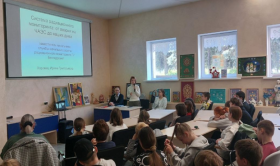
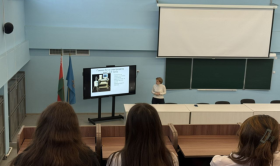
On April 27, 2026, Irina Khorovets , Deputy Head of the Radiation Monitoring Service – Head of the Radiation Monitoring Department of Belhydromet, delivered a lecture on the topic "Radiation Monitoring System: From the Chernobyl NPP Accident to the Present Day" for students of an engineering-focused specialized class at the State Educational Institution "Gymnasium No. 21 of Minsk." The event, dedicated to the 40th anniversary of the Chernobyl NPP accident, was organized as part of the Action Plan of the system of the Ministry of Natural Resources and Environmental Protection of the Republic of Belarus. During the meeting, Irina Khorovets presented an overview of the development of the radiation monitoring system in the Republic of Belarus. Special attention was paid to the lessons learned from the Chernobyl NPP accident and how they influenced the formation of the modern monitoring system and radiation safety assurance. The audience learned about the scale of the national monitoring network, the technologies used, data analysis methods, and the role of Belhydromet in continuously tracking the radiation situation. Students of the specialized class had a unique opportunity to become acquainted with the practical side of radiation safety, to learn about the critical tasks facing specialists in this field, and the importance of their work for the protection of the population and the environment. This event became an important step in career guidance work, demonstrating to future engineers the significance of their future profession and the contribution they can make to ensuring the country's environmental safety.
27.04.2026
Exhibition "National Security. Belarus – 2026"
From June 17 to 19 , the III International Exhibition of the Security Industry "National Security. Belarus – 2026" will take place at the Minsk International Exhibition Center (24, Pavliny Medyolki, St.). The event will bring together leading experts and showcase advanced developments and ready-made solutions to strengthen law enforcement agencies and security forces responsible for the nation's national security. The key focus areas of the exhibition will include information and digital security technologies, border protection equipment, special-purpose equipment for fire safety and disaster medicine, as well as solutions in industrial and environmental safety. The organizers are the State Secretariat of the Security Council of the Republic of Belarus, the Administration of the President of the Republic of Belarus and the Republican Unitary Enterprise "National Exhibition Center "BelExpo". Belhydromet will take an active part in the exhibition, presenting the web interface "Hydrometeorology: Into the Future with New Technologies." Visitors will also be able to explore printed materials highlighting Belhydromet's key areas of activity relevant to the event's theme, particularly those related to ensuring environmental safety. The exhibition will serve as a platform for showcasing achievements and exchanging experience in the field of national security.
26.04.2026
Memory of Chernobyl heroes honored in Minsk on the 40th anniversary of the tragedy
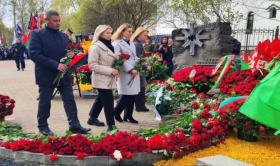
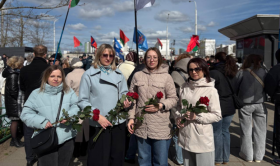
On April 26, the 40th anniversary of the Chernobyl nuclear power plant accident , commemorative events were held in Minsk, as well as throughout Belarus, in honor of the heroes who gave their strength, health, and lives to save millions. Every year on this day, people gather at the Church of the Icon of the Mother of God "Seeking the Lost" to honor the memory of the liquidators of the Chernobyl accident. Among them are veterans, participants in the liquidation efforts, representatives of government agencies, public organizations, and young people. Flowers were laid at the memorial signs "To the Akhvyars of Charnobyl" and "The Peace Stone of Hiroshima" in the Park of Peoples' Friendship by participants in the accident liquidation, representatives of government bodies, public organizations and youth. The event once again underscored that the feat of the liquidators will forever remain in the hearts of the Belarusian people. Among the participants of the commemorative event, as part of the delegation of the Ministry of Natural Resources and Environmental Protection of the Republic of Belarus, was Tatsiana Chatyrka , The First Deputy Head of Belhydromet. Her participation in this event is no coincidence. From the very first hours after the accident, our specialists monitored the radiation situation, provided data for decision-making, and continue to conduct observations to this day. Belhydromet is one of the key organizations that carries the scientific and practical legacy of those tragic days. This day once again reminded us that the feat of the Chernobyl accident liquidators will forever remain in the hearts of the Belarusian people. Belhydromet stands with the people. In memory and in deeds.
25.04.2026
Remembering a feat: Belhydromet honors the memory of the Chernobyl Accident liquidators
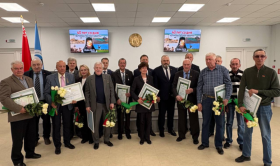
On April 25, 2026 , people whose destinies are forever linked to the Chernobyl nuclear power plant accident gathered at the state institution "Scientific and Production Center for Geology" (hereinafter – SPC Geology). Four decades later, this event became a tribute to memory, an expression of the deepest respect for the accident liquidators, and a reminder of the importance of the lessons learned from the tragedy. The feat of the liquidators was honored with a moment of silence. Tatiana Meleshko , Deputy General Director for Ideological Work at SPC Geology, reminded the audience of the scale of the Chernobyl accident that occurred on April 26, 1986. That day became a day of mourning for millions of people, leaving an indelible mark on the history of Belarus and the entire world. Among the distinguished guests were Alexey Stasyukevich , Deputy Minister of Natural Resources and Environmental Protection of the Republic of Belarus; Mikhail Kovalenko , Deputy Head of Belhydromet; Vladimir Melnikov , General Director of the state enterprise "SPC Geology"; Yuri Shumsky , Chairman of the Belarusian Professional Union of Forestry and Environmental Management Workers; as well as Evgeny Kriskevich , a representative of the Pervomaisky District Emergency Department of Minsk. Employees of the Ministry of Natural Resources system who participated in the liquidation of the accident's consequences were recognized and named individually, including employees of Belhydromet: Vyacheslav Viktorovich Parfenov, Viktor Vasilievich Sushchenya, Vladimir Leonidovich Samsonov, Lyudmila Alekseevna Guletskaya, Mikhail Antonovich Demyanchuk and Sergei Lvovich Romanov. Their selfless labor, demonstrated under conditions of extreme radiation danger, deserves the highest praise. During the event, a ceremonial awarding of the participant-liquidators took place. Belhydromet employees were presented with honorary certificates and letters of gratitude for their courage and professionalism in the performance of their duty. Among those awarded were also employees of SPC Geology, Belgosgeocenter, and the Republican Center for State Environmental Expertise. Vladimir Melnikov , General Director of SPC Geology, emphasized that geologists played an important role in the liquidation of the accident's consequences – a role not always obvious to the general public – by providing the scientific foundation for the safe execution of work.   Evgeny Kriskevich also delivered a speech, reminding everyone of the decisive role of firefighters in the first hours and days after the explosion and of their courage and professionalism under conditions of high radiation.   Mikhail Kovalenko , Deputy Head of Belhydromet, spoke about the role of Belhydromet's specialists in assessing the radiation situation, highlighting their promptness, professionalism, and ability to place duty above personal safety. Yuri Shumsky , Chairman of the Belarusian Professional Union of Forestry and Environmental Management Workers, noted that the Chernobyl accident served as a lesson for the entire world, teaching us to value safety and care for future generations. After the official part, the event participants went to the Park of Peoples' Friendship to lay flowers at the memorial signs "To the Akhvyars of Charnobyl" and  "The Peace Stone of Hiroshima." The Chernobyl events will forever remain in memory, reminding us of the fragility of the natural world and the invaluable experience we gained in overcoming this terrible accident. Our task is to remember, draw conclusions, and live in such a way that the traces of such accidents remain only on the pages of history. Today, Belhydromet continues its important work of monitoring the radiation situation, preserving and building upon the experience gained during the liquidation of the Chernobyl accident's aftermath.
25.04.2026
Memorial day at "Zolak": Belhydromet on the importance of radiation safety for the younger generation
On April 25, a dialogue platform entitled "Memorial day for victims of radiation disasters" was held at the State Educational Institution "Zolak Palace of children and youth" in Minsk . The event, aimed at raising awareness among students in grades 5–10 about the consequences of radiation accidents and the importance of radiation safety, was attended by Irina Khorovets , Deputy Head of the Radiation Monitoring Service – Head of the Department at Belhydromet. During the meeting, Irina Khorovets told the schoolchildren about Belhydromet's role in the country's radiation monitoring system, emphasizing the need for constant control over the radiation situation. Special attention was paid to the lessons learned from the Chernobyl accident and how this knowledge helps prevent similar tragedies in the future. Topics covered included sources of radiation, its impact on living organisms, and protective measures. The dialogue platform served as an important step in the patriotic and environmental education of the younger generation. Students had the opportunity to ask questions to a specialist, which contributed to a deeper understanding of complex radiation safety issues. Such events help foster a responsible attitude among youth towards environmental protection and personal safety.
24.04.2026
40 years after Chernobyl: Belhydromet at the International conference "40 Years After Chernobyl: The Results"
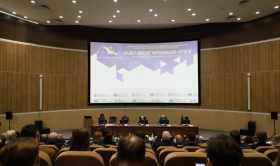
On April 24, the International Scientific and Technical Conference "40 Years After Chernobyl: The Results" was held at the Educational Center for Life Safety of the Ministry of Emergency Situations. The event, dedicated to the 40th anniversary of the Chernobyl nuclear power plant accident , brought together leading experts, scientists and government officials from Belarus and the Russian Federation. Participants conducted a comprehensive analysis of the experience accumulated over these years and identified further prospects for the rehabilitation and development of the affected territories. The conference was attended by representatives of various ministries and departments of Belarus and Russia directly involved in mitigating the consequences of the Chernobyl accident. Key participants included Zhanna Chernyavskaya, Chairperson of the Standing Commission on Ecology and Nature Management of the House of Representatives of the National Assembly of the Republic of Belarus; Academician of the National Academy of Sciences of Belarus Iosif Bogdevich; Professor Tatiana Marchenko of the All-Russian Research Institute for Civil Defense and Emergency Situations of the Russian Ministry of Emergency Situations; and Igor Sekret, Deputy Minister of Foreign Affairs of the Republic of Belarus . Deputy Minister of Emergency Situations Sergey Salanovich emphasized the significant amount of work carried out by Belarus to rehabilitate and return the territories affected by the accident to safe economic use. He noted that over four decades, an effective emergency preparedness and response system has been established, and comprehensive, systematic work has created conditions for safe living and economic activity. "Modern Belarus is a unique source of knowledge and practical experience in overcoming the consequences of the Chernobyl accident," said S.Salanovich, highlighting successes in ecosystem rehabilitation, socio-economic recovery, and long-term planning. He assured that the radiation safety of the population has been ensured, a multi-level specialist training system has been established, a set of protective measures is implemented on an ongoing basis, and social protection for citizens is at an adequate level. Zhanna Chernyavskaya , Chairperson of the Standing Commission on Ecology and Nature Management of the House of Representatives of the National Assembly of the Republic of Belarus, highlighted the importance of joint work by experts and scientists to develop a strategy for managing the post-Chernobyl situation. She mentioned the implementation of six state programs in Belarus and five Union State programs aimed at comprehensively solving the problems of the affected territories. Plans for the next five-year period include measures for public safety, the introduction of new technologies for medical care and protection of the forest fund from fires. The conference addressed the following key areas : - systematic socio-economic rehabilitation of affected regions; - current status and prospects in the development and production of nuclear-physical equipment; - experience in public information regarding the mitigation of the Chernobyl accident. Oleh Dziubailo, Head of the Radiation Monitoring Service of Belhydromet , presented a report entitled "The Radiation Monitoring System and Control of Settlements and Facilities on the Territory of the Republic of Belarus." He emphasized that the modern monitoring system is the result of half a century of development, but the 1986 Chernobyl accident was the catalyst for its large-scale improvement. " The radiation monitoring network available by 1986 made it possible to assess the dynamics of gamma radiation dose rate levels and the concentration of iodine-131 and cesium-137 in the air in the first days after the accident ," noted Oleh Dziubailo. However, the aftermath of the accident required the expansion of observations, including not only atmospheric air but also surface water, groundwater and soil. Large-scale surveys of territories were organized, and a network of reference sites and landscape-geochemical polygons was established. Today, 40 years later, the radiation situation in Belarus is stable and predictable. There is a steady reduction in radiation doses due to natural processes and targeted human activity. Consequently, since 2012, the radiation monitoring system has undergone optimization phases. The list of observation points in the area of the Belarusian NPP was expanded to include monitoring points for radioactive fallout, aerosols, surface water, and soil. The observation network around the Belarusian NPP is configured for use at all stages of its life cycle. Radiation monitoring in the Republic of Belarus is carried out in accordance with the Laws "On Radiation Safety" and "On the Legal Regime of Territories Contaminated with Radioactivity as a Result of the Chernobyl NPP Catastrophe," as well as the relevant Regulation of the Council of Ministers. The country operates 120 radiation monitoring observation points covering atmospheric air, soil, surface water, and groundwater. Observations are conducted for natural background radiation, the impact of potential sources of radioactive contamination (including transboundary transport), and for assessing radioactive contamination in areas affected by the Chernobyl NPP accident. Atmospheric air : at 41 observation points, gamma radiation dose rate is monitored (daily); at 25 natural fallout observation points and 10 radioactive aerosol observation points, total beta activity, activity of gamma-emitting radionuclides (cesium-137, beryllium-7, lead-210), and strontium-90 are measured. Soil : a network of 52 observation points (reference sites and landscape-geochemical polygons) allows for the assessment of gamma radiation dose rate and the activity of cesium-137 and strontium-90. Sampling is carried out periodically, with greater frequency at observation points near the Belarusian NPP and within the PGRERZ (Polesie State Radiation-Ecological Reserve). Surface water : at 19 observation points, including major rivers, transboundary sections, and water bodies in the NPP influence zone, monitoring of total alpha and beta activity, activity of cesium-137, and strontium-90 is conducted. Bottom sediments are also studied. Groundwater : at 6 observation points, total alpha and beta activity as well as the content of cesium-137 and strontium-90 are controlled. The Chernobyl accident stimulated the creation of an automated system for monitoring the radiation situation (ASMRS) in the influence zones of NPPs. Currently, the ASMRS includes 23 automated measuring points (AMPs) in the influence zones of NPPs in neighboring states and 10 AMPs in the influence zone of the Belarusian NPP, providing continuous monitoring. The Information and Analytical Center for Radiation Monitoring of Belhydromet collects, stores, and processes data. The RECASS NT hardware-software complex, capable of modeling accident scenarios and their environmental consequences, is used to forecast the spread of radioactive contamination. During the observation period following the Chernobyl NPP accident, three cases of increased levels of atmospheric radioactive contamination have been recorded, related to the Fukushima NPP accident, fires in the Chernobyl exclusion zone, and an unknown source (ruthenium-106). In all cases, the calculated radiation doses did not pose a threat to public health. Belhydromet actively participates in preparing the List of Settlements and Facilities located in radioactive contamination zones and in updating radiation situation maps. Over 40 years, 1,491 settlements have been removed from radioactive contamination zones. Belhydromet's modern radiation monitoring system provides timely information to the public and relevant authorities via web resources ( rad.org.by , nsmos.by ) and the mobile application "Weather in Your Pocket." This confirms Belarus's high level of preparedness for managing the post-Chernobyl situation and ensuring radiation safety. The International Scientific and Technical Conference "40 Years After Chernobyl: The Results" served as an important platform for reflecting on the path traveled, sharing knowledge, and developing effective solutions aimed at building a safer future.   The information was prepared based on materials from the website of the Ministry of Emergency Situations of the Republic of Belarus and the report of Oleh Dziubailo, Head of the Radiation Monitoring Service of Belhydromet.
24.04.2026
Belhydromet took part in a requiem rally on Chernobyl disaster remembrance day
Today, April 24 , Belarus remembered the events of 1986. The commemorative event took place at the memorial stone to the victims of the Chernobyl disaster , where representatives of various organizations and agencies gathered to honor the memory of the hero liquidators of the Chernobyl nuclear power plant accident. Belhydromet employees joined the many participants of the requiem rally dedicated to the 40th anniversary of the Chernobyl nuclear power plant accident . This event was not just an anniversary but a profound reminder of the courage, self-sacrifice, and lessons we must never forget. The head of the administration of Minsk’s Pervomaysky District, Vadim Perednya , emphasized in his speech the significance of the feat of those who were the first to take the radiation hit: “We have gathered here today to honor the memory of the first people who took the invisible blow of radiation. To bow our heads to the heroism of firefighters, police officers, military personnel, engineers… All those who were the first to respond in liquidating the consequences of the Chernobyl accident” — these words echoed in the hearts of those present. We, the employees of Belhydromet , whose work is inextricably linked to environmental monitoring, feel the significance of those events particularly keenly. Every day, as we monitor the radiation situation across the country, we are not just doing our job — we are preserving the memory of the past and caring for the future. Our daily work is a unique tribute to the liquidators and a guarantee that the lessons of Chernobyl will be learned, and that public safety will remain a priority. On this day, at the memorial stone, we reaffirmed our commitment to this important duty.
23.04.2026
Press conference "Chernobyl: from renewal to sustainable development"
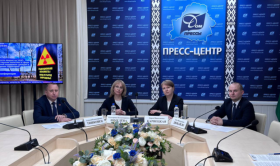
On April 23, 2026, a press conference dedicated to current issues of the radiation situation in the Republic of Belarus and the 40th anniversary of the Chernobyl nuclear power plant accident was held at the "House of Press" Republican Unitary Enterprise . The following participants took part in the press conference: - Oleh Dziubailo – Head of the Radiation Monitoring Service of Belhydromet; - representatives of the Ministry of Emergency Situations of the Republic of Belarus, the Department for Nuclear and Radiation Safety of the Ministry of Emergency Situations, the Ministry of Agriculture and Food of the Republic of Belarus, the Mogilev and Gomel Regional Executive Committees, and the Polesie State Radiation-Ecological Reserve. Oleh Dziubailo presented up-to-date information on the current radiation situation in the country. He noted that the Chernobyl accident was an event of global scale, which has had a significant impact on the development of radiation safety worldwide. In recent years, large-scale studies have been conducted: - 100 inhabited localities and 32 facilities were surveyed; - more than 1,000 soil samples were collected and analyzed; - the content of the main radionuclides – cesium-137, strontium-90, and plutonium – was determined. The radiation situation in the republic is gradually improving due to natural radioactive decay. The current list of inhabited areas and facilities located in radioactive contamination zones is available on the website rad.org.by. Efforts to maintain radiation safety for the population will remain relevant for many decades to come, which underscores the importance of continuous monitoring and control of the radiation situation.   The video recording of the press conference can be viewed at the link .
23.04.2026
40 years since the Chernobyl accident
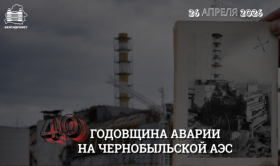
On April 26, 2026, it will be 40 years since the accident at the Chernobyl Nuclear Power Plant. This date is not only an occasion to remember the events of 1986 but also an opportunity to assess the work carried out to minimize the consequences of radioactive contamination of territories, as well as to emphasize the importance of continuous monitoring of the radiation situation for the timely warning of government authorities and the public to enable prompt protective measures. From the very first days after the accident, specialists of Belhydromet took part in assessing the radiation situation. Efficiency, professionalism, and a willingness for self-sacrifice became the key traits of those who found themselves on the front line of the fight against an invisible threat. Anatoly Polishchuk , a veteran of the Chernobyl accident cleanup, former Head of Belhydromet, and a veteran of the State Hydrometeorological Service of the Republic of Belarus, who was working in Mogilev at the time, recalled: "In 1986, our hydrometeorological department honorably fulfilled its duty to the Motherland — including measuring the gamma background exposure dose rate." As early as April 27, instructions were received to switch to hourly observations, and all weather stations immediately joined the effort. Liquidators from Mogilev region near the destroyed Chernobyl reactor   Viktor Melnik , a Chernobyl accident cleanup veteran, former Deputy Head of Belhydromet, shared his memories of that time: "The hydrometeorological service worked coherently, in an organized and professional manner — as befits true patriots ready to defend their land." Specialists worked in the 30‑kilometer zone and directly in Chernobyl, compiling detailed contamination maps. These maps became the basis for decisions on resettlement zones, public protection measures, and plans for managing the consequences of the accident.   Helicopter surveys played a particularly important role. Vyacheslav Parfenov , a Chernobyl cleanup veteran and Head of the Land Monitoring Department of the Environmental Monitoring Service at Belhydromet, described how he and his colleagues measured gamma background levels in dozens of settlements, sometimes at great personal risk: "The pilots showed true skill, maneuvering between houses and trees, while local residents greeted them with hope and trust. For them, our helicopters were a symbol that they were not forgotten and that everything possible was being done to help." Flights into the zone   Olga Zhukova , a Chernobyl cleanup veteran, former Head of the Department for Scientific and Methodological Support of Radiation‑Environmental Observations at Belhydromet, who took part in expeditions to the exclusion zone, spoke about working in the "Red Forest" — an area that absorbed one of the most intense radiation strikes: "The dosimeters were off the scale, but we continued to do our duty. Every measurement, every sample was critically important. We understood: people's lives depended on the accuracy of our data." Expedition participants in the floodplain of the Pripyat River (10‑km zone of the Chernobyl NPP, Ukraine) near the Red Forest"   Vladimir Samsonov , a Chernobyl cleanup veteran and Head of the Radiospectrometry Department of the Radiation Monitoring Service at Belhydromet, shared how their research helped prevent the re‑evacuation of people to hazardous areas: "We were able to prove that radiation levels in some places were still too high. This allowed us to avoid new tragedies and preserve the health of hundreds of families." Today, 40 years later, the service continues to conduct continuous monitoring of the radiation situation throughout the entire territory of the country. Key areas of Belhydromet's work in the context of Chernobyl's legacy: - conducting online radiation monitoring using automatic measurement points of the automated system for radiation monitoring. Every 10 minutes, gamma radiation dose rate measurements are transmitted to Belhydromet, where they are monitored around the clock by specialists from the Operational Radiation Control Data Department. - monitoring radionuclide content in ambient air. Determining the radiation characteristics of radioactive fallout and near‑surface atmospheric aerosols is primarily aimed at detecting short‑lived anthropogenic radionuclides, which serve as indicators of an accident at nuclear or radiation‑hazardous facilities. - research on cesium‑137 and strontium content in soil enables assessment of radioactive contamination density in territories and monitoring of radionuclide migration, as well as monitoring of surface and groundwater to assess annual average concentrations of radionuclides in water and bottom sediments. - Belhydromet provides access to up‑to‑date radiation situation data via its official website: https://rad.org.by . - the use of modern hardware‑software complexes that allow modeling the spread of radioactive contamination in the environment over time and space, taking into account meteorological conditions. The Chernobyl accident was a lesson for the entire world. The Republic of Belarus , more than any other country, has learned its main lessons: - the need for strict compliance with nuclear and radiation safety standards at nuclear energy facilities. - the importance of international cooperation on radiation safety matters. - the critical role of environmental radiation monitoring. - information transparency regarding radiation monitoring results, as well as the need to educate the public on radiation safety matters. When using the information a reference to Belhydromet is obligatory
23.04.2026
On April 23, a representative of Belhydromet held an event at school No. 204 in Minsk dedicated to the 40th anniversary of the Chernobyl accident
On April 23, a thematic event dedicated to the 40th anniversary of the Chernobyl Nuclear Power Plant accident took place at Secondary School No. 204 of Minsk . The meeting was held as part of the Action Plan for events within the system of the Ministry of Natural Resources and Environmental Protection of the Republic of Belarus . The participants were students from a specialized engineering class. The schoolchildren were addressed by Iryna Khorovets   – Deputy Head of the Radiation Monitoring Service and Head of the Radiation Monitoring Department of Belhydromet. The topic of the lecture was: "Radiation monitoring system: from the Chernobyl Accident to the present day." During the presentation, the speaker discussed the history of the development of the radiation monitoring system in Belarus after the Chernobyl accident, explained what lessons were learned from the 1986 tragedy and how they influenced the improvement of radiation monitoring methods, presented the modern technologies and equipment used by Belhydromet to track radiation levels across the country, described the operating principles of the radiation monitoring network and the real‑time data transmission procedure, and answered students' questions about the current radiation situation in Belarus and preventive measures. The event allowed the high school students to broaden their understanding of radiation safety, learn about the role of the hydrometeorological service in protecting the public and the environment, and become acquainted with professional development opportunities in the field of radiation monitoring. We hope that such meetings will help young people better understand current environmental challenges and inspire some graduates to choose careers related to environmental protection and radiation safety.
1 2 3 4 5 6 7 8 9 10 [11..12]

Specialized sites

Pogoda.by Rad.org.by nsmos.by

Informational resources

000120_eb96852ad10b0f40634fc2ac807a208a_work.jpg State Symbols of the Republic of Belarus 000120_cffd213c635e16631680b72b64785b72_work.jpg The National Legal Internet Portal of the Republic of Belarus 000120_8c3bdf6e7574e3150a94810421a74e17_work.jpg The Ministry of Natural Resources and Environmental Protection of the Republic of Belarus 000120_e961c7bafa7862b6ec792000d417d43c_work.jpg The Official Internet Portal of the President of the Republic of Belarus 000120_d4ccbc92a75822a04d9443d206470042_work.jpg The Portal for Rating Assessment of the Quality of Services Provided by Organizations in the Republic of Belarus 000120_60625fb4d7255be81a7d6a4f54391049_work.jpg The CIS Interstate Council for Hydrometeorology (CIS ICH) 000120_2cf03b5ed9cfd948ec67d2edb868ce8b_work.jpg Information Analysis Portal of the Union State 000120_e42220828207561fd3ae263681478868_work.jpg The Union State Committee on Hydrometeorology and Environmental Contamination Monitoring 000120_a48c08245f74d0ff95dbd0e558f8b0be_work.jpg The Internet Portal "The Youth of Belarus"








Cookies are used to ensure the user-friendliness of the site

More details
Accept
Decline

About us

  • Structure
  • History
  • Periodicals

Activities

  • Agrohydrometeorology
  • Radiation and Ecology
  • Aviation weather reports
  • Scientific activity

Services

  • Requisites

Press center

  • News and events

Contacts

  • Address: 110, Nezavisimosti Avenue, Minsk, 220114
  • Phone:  +375 17 373-22-31
  • E-mail: kanc@hmc.by
  • Opening hours:
  • Monday-Friday:
    9.00-18.00
  • Days off: Saturday, Sunday
  • x ok facebook

© Belhydromet, 2016-2026