Ministry of natural resources and environmental protection of the Republic of Belarus Map Republic

BELHYDROMET

Ru Be En
всв
youtube.com telegram viber instagram vk
  • About us
    • Structure
    • History
    • Periodicals
  • Activities
    • Agrohydrometeorology
    • Radiation and Ecology
    • Aviation weather reports
    • Scientific activity
  • Services
    • Requisites
  • Press center
    • News and events
  • Contacts
    • Guidance of Belhydromet
    • Reception
    • Office management department
  • instagram X youtube
  • Ru Be En
  • Блок 3 в 1
Main / Блок 3 в 1

Блок 3 в 1
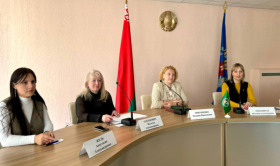
10.04.2026
Annual reporting conference of the Primary Trade Union Organization of Belhydromet: summary of results for 2025
On April 10, 2026, the annual reporting conference of the primary trade union organization was held at Belhydromet. The event summarized the results of activities for 2025 and outlined paths for further development. The delegates of the conference, representing the interests of trade union members, heard reports on key items on the agenda. T he Head of Belhydromet, Siarhei Khilman , addressed the meeting participants with a welcoming speech. He emphasized the important role of the trade union organization in the life of the institution and noted: "In the past year, we have managed to build effective cooperation between the administration and the trade union – this has directly improved working conditions and social security for our employees. I would especially like to thank the trade union for its active participation in organizing cultural, mass, and sports events." The report on the work done for 2025 was presented by the Chairperson of the primary trade union organization, Anastasia Zhyd . In her speech, she highlighted the main achievements, implemented projects, and initiatives aimed at protecting the rights and interests of Belhydromet employees. Subsequently, the reports of the auditing commission were presented, and the organization's budget of income and expenses for the past year was approved. Particular attention was paid to the implementation of the collective agreement of the state institution "Republican Center for Hydrometeorology, Radioactive Contamination Control, and Environmental Monitoring" for 2025. The discussion showed that the main provisions of the agreement had been fully implemented, demonstrating constructive dialogue between the administration and the trade union. The conference was also attended by the Deputy Head of Belhydromet for Ideological Work, Viktoryia Nevadnichaya . She highly praised the work of the trade union organization, emphasizing its effectiveness and significance. At the same time, Viktoryia Nevadnichaya focused attention on the need to organize joint work among all public organizations within Belhydromet to enhance their overall influence. A significant moment was the speech of Tatyana Grigorenko , Chief Specialist for Organizational and Public Work of the Minsk Regional Organization of the Belarusian Trade Union of Forestry and Environmental Management Workers. She gave a positive assessment of the activities of the primary trade union organization of Belhydromet and assured those present that the sectoral trade union always stands guard over the rights and legitimate interests of its members, always ready to offer assistance and provide reliable protection. The event concluded with an awards ceremony for active trade union members. The conference was held in a businesslike yet constructive atmosphere, confirming the effectiveness of the work accomplished and the readiness for further fruitful cooperation.
09.04.2026
"We achieved this together": how Minsk has changed over 15 years
From 9 April to 9 May 2026, a unique photo exhibition entitled "We achieved this together" is being held at the Belhydromet building. The exhibition is dedicated to the landmark sites of the city of Minsk that were built or reconstructed between 2009 and 2024. Special attention is given to the facilities that have transformed the face of Minsk, making it more modern, comfortable and memorable. These are not just buildings – they are symbols of the development of our city, reflecting the work and efforts of the many people who laboured to transform Minsk. Here one can see modern residential complexes, renovated historical buildings, new public spaces and infrastructure, as well as cultural and sports facilities that have appeared in recent years. Each photograph is a story of how, through joint efforts, we are creating a space where people want to live, work and relax. The photo exhibition "We achieved this together" is not only an opportunity to admire architectural masterpieces, but also a chance to learn more about the development of one's city, to see how Minsk changes over time, and to be inspired by the scale and quality of the projects that have been implemented.
06.04.2026
Under the shelter of the frontal clouds of cyclone Rapunzel
Last week, a reorganization of atmospheric processes took place: a long period of sunny anticyclonic weather gave way to cool conditions and rain in Belarus. Thus, starting from the past weekend, the territory of our country came under the influence of cyclonic vortices, whose frontal boundaries brought not only precipitation, wind gusts of up to 22 m/s, and the first thunderstorms of the current season, but also facilitated the influx of cold air from Scandinavia into our region. This morning, after allowing another cold atmospheric front to pass, the territory of the republic found itself in the cold and windy rear sector of cyclone Rapunzel , with its center located over southern Finland. Therefore, in most of the territory, in addition to rain mixed with snow pellets , strong gusty winds are observed. Unsettled weather conditions will persist for the next three days (April 7–9) . The cloudy vortex Rapunzel, moving eastward, will merge with cyclone Quiana , forming a single cyclonic depression, and the republic will continue to be located in its rear sector. Consequently, Belarus will continue to experience windy weather with precipitation. During the daytime of April 7 (Tuesday) , due to the development of cumulonimbus clouds in the southern regions, thunderstorms are possible. As a result of the advection of air masses from northern latitudes, the temperature background will drop and approach March values. Nighttime lows will range from -4°C to +5°C, while daytime highs will fluctuate from +2°C in the north to +10°C in the southwest. At the same time, a tight pressure gradient combined with the development of convective processes will contribute to increased wind with gusts of 15–20 m/s. Due to the expected adverse hydrometeorological phenomenon on April 7 (Tuesday), an orange hazard level has been declared for the southwestern half of the republic . According to preliminary forecasts, on April 10–12 (Friday–Sunday) , the influence of frontal boundaries will weaken, and with rising atmospheric pressure, precipitation will become local and short-lived. At the same time, cold weather will persist, with temperatures generally 1–6°C below the climatic norm. Weak icy conditions will be observed in some areas during the night and morning hours. When using the information a reference to Belhydromet is obligatory
06.04.2026
Information on the hydrometeorological situation in the river basins of the Republic of Belarus in March 2026
March 2026 was record warm and anomalously dry . The average air temperature across Belarus was +5.8°C, which is 5.0°C above the climatic norm. An elevated temperature regime persisted throughout all decades of March. The transition of the average daily air temperature above 0°C (the beginning of climatological spring) occurred 1–2 weeks earlier than usual – already in the third decade of February. During the first spring month of this year, precipitation amounted to 3.8 mm, which is 10% of the climatic norm. Absolute monthly precipitation minima were broken at all observation points in the eastern half of the country. Over most of the territory, less than 15% of the climatic precipitation norm fell, while at the Zhlobin and Slavgorod stations, no precipitation was observed during the entire month. Throughout all decades of the month, precipitation was recorded in extremely low amounts. In March, snow and ice cover melted. A rise in water levels due to the spring flood was observed on the rivers ; however, its intensity was low, as nighttime temperatures below zero and the lack of precipitation restrained the spring processes. Water remained in the floodplain on most rivers of the Dnipro, Sozh, and Prypiat basins, as well as on certain sections of rivers in the Neman, Viliya, and Berezina basins. Water levels approached dangerous high levels on certain sections of rivers in the Sozh and Prypiat basins. The water flow of the Western Dvina River was 40–70% above normal; the water flow of the Viliya, the Dnipro, the Berezina and the Sozh rivers was close to the usual levels for this time of year; while the water flow of the Neman and the Prypiat rivers was somewhat below normal. When using the information a reference to Belhydromet is obligatory
16.10.2023
Belhydromet will take part in the International specialized exhibition "Energy. Ecology. Energy saving. Electro" (EnergyExpo' 2023)
The XXVII Belarusian Energy and Environmental Forum will be held in Minsk from October 17 to 20, 2023.   The purpose of the forum is to promote the innovative development of the fuel and energy sector of Belarus. Every year the forum becomes a unique meeting place for power engineers and environmentalists, thereby contributing to the expansion of cooperation, the exchange of advanced developments and projects. The business program of the forum includes scientific and practical conferences, round tables and seminars where experts present modern technological solutions in the field of energy, energy conservation and ecology. The forum will host the International specialized exhibition "Energy. Ecology. Energy saving. Electro" (EnergyExpo' 2023)  in which Belhydromet will take part. As part of the exposition of organizations of the Ministry of Natural Resources and Environmental Protection of the Republic of Belarus, Belhydromet will present the Republican Information System for Automated Environmental Monitoring (RISAM), the National Environmental Monitoring System in the Republic of Belarus (NEMS), will demonstrate a 3-D model of the Minsk meteorological station, which will allow visitors to visually familiarize themselves with the technical capabilities of Belhydromet in the production of hydrometeorological information. Informational materials on environmental issues will be presented to a wide range of visitors. Visitors can ask any question they are interested in when viewing the exhibition which will be answered by specialists of Belhydromet. For reference: The Belarusian Energy and Environmental Forum has been held since 1995 attracting the attention of leading Belarusian and world manufacturers of energy-efficient equipment, technologies and materials for energy, petrochemicals, housing and communal services, the manufacturing sector and environmental protection in the Republic of Belarus and is the country's largest presentation platform on these topics. The structure of the exposition includes industry sections of the Ministry of Energy, the Belarusian State Concern for Petroleum and Chemistry, the State Committee for Standardization, the State Committee for Science and Technology, the National Academy of Sciences of Belarus, the Ministry of Education, the Ministry of Natural Resources and Environmental Protection. This year, over 200 enterprises and organizations will present their products and services at the forum. Among them are the largest enterprises of the Belarusian energy industry and foreign companies interested in promoting products to the Belarusian market. The rich business program of the forum includes 18 events, including conferences, seminars, round tables, presentations of companies participating in the exhibition. During the events, domestic and foreign experts will present modern technological solutions in the field of energy, petrochemistry, energy conservation and ecology. Within the framework of the forum's business program, the following issues will be considered: ESG transformation and sustainable development; digitalization of production, fuel and energy and petrochemical complexes; the possibility of using natural refrigerants to save energy and increase the efficiency of refrigeration units; energy storage systems on lithium-ion batteries to ensure uninterrupted power supply of industrial facilities in Belarus; the reality and prospects of electric transport; current situation and prospective directions the use of local fuel and energy resources, the efficient use of electric energy and others. Within the framework of the forum, under the patronage of the Ministry of Energy of the Republic of Belarus and with the organizational support of the Rosatom State Corporation, an international conference will be held on the role of nuclear energy in achieving the UN Sustainable Development Goals, the BelAES project as an exemplary example of international cooperation, which created an opportunity for the implementation of major partner projects in new areas of work. Coverage of the forum's events in the Belarusian and foreign mass media will be provided by 18 information partners representing leading print publications and Internet portals. Detailed information about the participants and events of the forum is available on the official website of the forum: https://energyexpo.by /. One can get a personal electronic invitation card which makes it possible to attend the forum events once after registering on https://https://energyexpo.by /. We invite you to visit the Belhydromet exposition! Exhibition opening hours: October 17-19, 2023 from 10-00 to 18-00, October 20, 2023 from 10-00 to 14-00. Venue: Republic of Belarus, Minsk, Pobediteley Ave., 20/2 (Football Arena).  
03.09.2020
Information on the hydrometeorological situation in river basins of Belarus formed in August 2020
In August 2020, the average air temperature in Belarus was +18.6°C, which is 1.3°C higher than the climatic norm. All three decades were warm. It was warmer in the first and third decade, the average air temperature of which was higher than the norm by 1.6 and 1.8ºС, respectively. On average, there was a lack of precipitation throughout the country: 58.6 mm fell or 87% of the monthly norm. Some meteorological stations recorded 1.5-2 monthly precipitation norms. During the month, the precipitation was extremely uneven. In the first and second decade of August, there was a strong deficit of precipitation: 19% and 42% of the norm fell, respectively. In the third decade, there was an excess of moisture: 208% of the ten-day norm dropped out. In the first two decades of August, the rivers showed mainly a decline in water levels and their even course. As a result, on the Western Dvina near Vitebsk, the Dnieper near Mogilev, Zhlobin, Rechitsa and Loyev, the Berezina near Svetlogorsk, the Sozh near Krichev, Slavgorod and Gomel conditions for river transport have become worse. On the Sozh tributary, the Oster near Khodun, the water level dropped below the mark of the water outlet to the floodplain. In the third decade, most rivers showed an increase in water levels due to precipitation. The minimum water levels in certain sections of the rivers of the Neman, the Viliya and the Pripyat basins approached the multiyear minimums for August, and on the Yaselda near the Bereza (a tributary of the Pripyat) the value of the minimum water level dropped below the historical minimum for this time of year. In August, the water content of the Berezina was 15-20% less than the norm, the Western Dvina, the Neman, the Viliya, the Western Bug and the Pripyat were half the usual for this time of year. The water content of the Sozh, the Dnieper near Orsha and Rechitsa was higher than the norm by 10-35% and the Dnieper in Mogilev-Zhlobin section by 55-65%. The average monthly water temperature in the rivers and reservoirs of the country was +16 +23°С, which was close and somewhat lower than usual for this time of year.
01.09.2020
Forecast information on minimum water levels in rivers in September 2020
Overview of hydrological situation of August In the first two decades of August, rivers showed mainly a decline in water levels and their even course. As a result, on the Western Dvina near Vitebsk, on the Dnieper near Mogilev, Zhlobin, Rechitsa and Loev, on the Berezina near Svetlogorsk, on the Sozh near Krichev, Slavgorod and Gomel conditions for river transport have become worse. On the Oster a tributary of the Sozh near the village of Khodun, the water level dropped below the mark of the water outlet to the floodplain. In the third decade, most rivers showed an increase in water levels due to precipitation. In August, water content of the Berezina was 15-20% less than the norm, the Western Dvina, the Neman, the Viliya, the Western Bug and the Pripyat were half of the usual for this time of year. Water content of the Sozh, the Dnieper near Orsha and Rechitsa was higher than the norm by 10-35% and the Dnieper in Mogilev-Zhlobin section by 55-65%. Minimum water levels in certain sections of rivers of the Neman, the Viliya and the Pripyat basins approached multiyear minimums for August, and on the Yaselda near Bereza (a tributary of the Pripyat), minimum water level dropped below the historical minimum for this time of year. Rivers are dominated by an increase in water levels as of the forecast date. On the navigable sections of the Western Dvina, the Neman, the Dnieper, the Berezina and the Sozh unfavorable conditions for the operation of river transport are observed. Forecast information on the minimum water levels in September Minimum water levels in September are projected below the multiyear averages for this time of year.
31.01.2020
WMO confirms 2019 as second hottest year on record
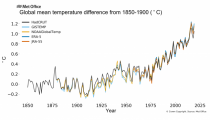
The year 2019 was the second warmest year on record after 2016, according to the World Meteorological Organization’s consolidated analysis of leading international datasets. Average temperatures for the five-year (2015-2019) and ten-year (2010-2019) periods were the highest on record. Since the 1980s each decade has been warmer than the previous one. This trend is expected to continue because of record levels of heat-trapping greenhouse gases in the atmosphere. Averaged across the five data sets used in the consolidated analysis, the annual global temperature in 2019 was 1.1°C warmer than the average for 1850-1900, used to represent pre-industrial conditions. 2016 remains the warmest year on record because of the combination of a very strong El Niño event, which has a warming impact, and long-term climate change. “The average global temperature has risen by about 1.1°C since the pre-industrial era and ocean heat content is at a record level,” said WMO Secretary-General Petteri Taalas. “On the current path of carbon dioxide emissions, we are heading towards a temperature increase of 3 to 5 degrees Celsius by the end of century.” Temperatures are only part of the story. The past year and decade have been characterized by retreating ice, record sea levels, increasing ocean heat and acidification, and extreme weather. These have combined to have major impacts on the health and well-being of both humans and the environment, as highlighted by WMO’s Provisional Statement on the State of the Global Climate in 2019, which was presented at the UN Climate Change Conference, COP25, in Madrid. The full statement will be issued in March 2020. “The year 2020 has started out where 2019 left off – with high-impact weather and climate-related events.  Australia had its hottest, driest year on record in 2019, setting the scene for the massive bushfires which were so devastating to people and property, wildlife, ecosystems and the environment,” said Mr Taalas. “Unfortunately, we expect to see much extreme weather throughout 2020 and the coming decades, fuelled by record levels of heat-trapping greenhouse gases in the atmosphere,” said Mr Taalas. More than 90 percent of the excess heat is stored within the world’s ocean, and so ocean heat content is a good way to quantify the rate of global warming. A new study published 13 January in Advances in Atmospheric Sciences with data from the National Oceanic and Atmospheric Administration/National Center for Environmental Information and the Institute of Atmospheric Physics showed that ocean heat content was at a record level in 2019. The past five years are the top five warmest years in the ocean historically with modern instruments, and the past ten years are also the top ten years on record. Modern temperature records began in 1850. WMO uses datasets (based on monthly climatological data from Global Observing Systems) from the United States National Oceanic and Atmospheric Administration, NASA’s Goddard Institute for Space Studies, and the United Kingdom’s Met Office Hadley Centre and the University of East Anglia’s Climatic Research Unit in the United Kingdom.   It also uses reanalysis datasets from the European Centre for Medium Range Weather Forecasts and its Copernicus Climate Change Service, and the Japan Meteorological Agency.  This method combines millions of meteorological and marine observations, including from satellites, with models to produce a complete reanalysis of the atmosphere. The combination of observations with models makes it possible to estimate temperatures at any time and in any place across the globe, even in data-sparse areas such as the polar regions. The spread between the five data sets was 0.15°C with both the lowest (1.05°C) and the highest (1.20°C) being more than 1°C warmer than the pre-industrial baseline.  Taken from:  https://public.wmo.int/en/media/press-release/wmo-confirms-2019-second-hottest-year-record  
20.11.2019
Visit of World Bank experts
  Visit of World Bank experts to Belhydromet took place on 19 November, 2019.    During the visit draft of a Road Map was reviewed and discussed in detail. Road map “Strengthening Hydromet And Early Warning Services in Belarus” prepared by World Bank as part of implementation of component 3 “Improving the quality of hydrometeorological information and information on radiation situation, including the use of early warning systems” of the project Project “Enhancing Disaster Preparedness in the Republic of Belarus”.   From World Bank side event was attended by:      Daniel Werner Kull, senior disaster risk management specialist, project manager;  Vladislava I. Nemova, environment specialist,  Haleh Kootval, senior specialist, meteorology and public weather service, Andreas Schumann,senior specialist in hydrology and floods Paolo Fiorucci, senior specialist in wild/forest fires  Kathrin Baumman-Stanzer, senior specialist in radiation monitoring and forecasting,   Andreas Schaffhauser,senior specialist in MeteoAlarm integration   Ekaterina Zayash, interpreter.    Reference:  Technical Assistance Project “Enhancing Disaster Preparedness in the Republic of Belarus”   aims to enhance disaster risk preparedness capacity in the Republic of Belarus by improving extreme weather reporting, risk identification, data availability and dissemination and national disaster risk reduction strategy.    The project is implemented jointly by Ministry of Natural Resources and Environmental Protection of the Republic of Belarus and Ministry of Emergency Situations of the Republic of Belarus.  The first working meeting with World Bank experts was held in Belhydromet on January this year. During this week’s meeting, representatives of Belhydromet familiarized experts with the history of hydrometeorological service of the Republic of Belarus, system of activities in the field of meteorology, hydrology and radiation monitoring, also conducted an excursion in the center, accompanying with interesting information, answered questions.     Following the visit was made a decision by World Bank experts and Belhydromet employees to jointly finalize the draft Roadmap, which represents potential path aimed at strengthening the national hydrometeorological service (Belhydromet) and early warning systems, forest fire forecasting, as well as radiation monitoring and weather forecasting systems tailored to customer needs. Draft of a Roadmap is based on assessment of needs and potential of Belhydromet, which is main and only official provider of services in the field of weather, water resources, radiation monitoring, as well as forecasts and warnings.   Draft of a Roadmap, reviewed on November 19, 2019, will be jointly finalized until March 2020. Bilateral signing of the project is scheduled for April 2020 at World Bank office in Minsk.      
24.04.2019
April 26 – 33rd anniversary of the Chernobyl disaster
   Dear friends!  Tragic date in the history of Belarus is approaching - another anniversary of the largest technological catastrophe not only in the territory of the former Soviet Union, but also, in the whole world. The accident at the Chernobyl nuclear power plant affected fates of millions of people, the scale of the accident was so great that it took heroic efforts by executives of all ranks, professionals, ordinary people to quickly assess the radiation situation, develop technical and managerial solutions aimed at preventing even more serious consequences of the catastrophe and organization of events to save life and health of ppeople. Belhydromet together with other ministries and institutions took part in elimination of consequences of the Chernobyl NPP disaster.  Since 1963 Belarus have measured gamma-radiation dose rate (MD) at a network of hydrometeorological stations, and then control points for radioactive fallout from the atmosphere were introduced (natural precipitation from the atmosphere was sampled using horizontal plates). Radiation monitoring network available in 1986 made it possible to estimate dynamics of gamma-radiation dose rate levels and iodine-131 and cesium-137 concentrations in the air in first days after the Chernobyl disaster. One of the most important and urgent areas in the aftermath of the accident at the Chernobyl nuclear power plant in Belarus was the organization of work to assess radioactive contamination of the territory and phased creation of radiation monitoring system. In order of Belhydromet No. 80 dated 05/19/1986 in connection with the expansion of work on  control of radioactive contamination of south-eastern territory of the BSSR at Minsk Center for Radiation Control and Environmental Pollution Research (CRVP) organized laboratory for control of radioactive contamination in order to strengthen and expand radiation monitoring work. Radiation and radiation-environmental monitoring departments have been established on the basis of Minsk CRSPS with spectrometry laboratories, radiation monitoring of surface waters, soil and atmospheric air. In 1986 soil sampling was organized in contaminated areas near the Chernobyl nuclear power plant, in which took part specialists from the center. For these purposes helicopters were chartered in Moscow and sets of protective clothing were purchased.  On the basis of data on density of radioactive contamination of the territory of Belarus, obtained as a result of expeditionary surveys, already in June 1986, Institute of Nuclear Energy of the Academy of Sciences of BSSR (now State Institute of Nuclear Physics and Electronics-Sosny) prepared first radioactive contamination map of the territory of the republic with cesium-137, where directly took part Behydromet specialists. In 1987, together with Moscow specialists, an expedition was conducted to examine water bodies polluted as a result of the Chernobyl accident. Expedition was carried out on ship of Gomel Shipping Company. Through Belhydromet laboratory passed a huge stream of samples of natural objects, taken in south-eastern part of Belarus, and then throughout the territory of the republic. Test results of samples were analyzed for accuracy, systematized and recorded first on paper, then in specialized electronic database.  To ensure compliance with unified methodological guidance for assessment of radioactive contamination, coordination of data obtained by various departments Council of Ministers of Belarussian SSR No. 555 from 12/12/1989 established an Interdepartmental Commission for Radiation Control of Natural Environment at Belhydromet. In 1991, The Law of the Republic of Belarus “On legal regime of territories subjected to radioactive contamination as a result of the Chernobyl NPP disaster” was adopted, in which functions of Belhydromet were legislatively fixed: conducting general assessment of radiation situation in the republic (radiation monitoring), maintaining data bank on radioactive contamination of the territory of the Republic of Belarus. During this period Belhydromet organized large-scale radiation survey of populated areas of the Republic of Belarus including a household survey of populated areas located in radioactively contaminated area (territories with 137Cs contamination levels 37 kBq / m2 (1 Ci / km2) and more). Survey results were systematized, analyzed and used in zoning the territory of the republic according to levels of radioactive contamination. According to the Law of the Republic of Belarus No. 258-З from 12.05.1999. “On introducing changes and amendments to the Law of the Republic of Belarus“ On the legal regime of territories subjected to radioactive contamination as a result of the disaster at the Chernobyl nuclear power plant ”at least once every 5 years on the basis of updated data is updated and approved by the Council of Ministers of the Republic of Belarus related to radioactively contaminated areas.  The project of the List and maps of zones of radioactive contamination is being prepared by Belhydromet specialists. The adopted zoning is effectively used in planning and carrying out measures to minimize consequences of the disaster at the Chernobyl nuclear power plant and ensure radiation safety of population. Since 1987, Belhydromet conducts regular observations of radioactive contamination of rivers of Dnieper basin - Pripyat, Dnieper, Sozh, Iput, Besed, and since 1993 - observations of vertical migration of radionuclides on the network of landscape-geochemical sites located on various soil types.  Our specialists participated in number of international programs of European Commission, including preparation of Atlas of European Pollution with Cesium-137; international project of Franco-German Chernobyl Initiative “Radioecological Consequences of the Chernobyl Accident”.  As part of implementation of measures of Joint Action Program to Overcome Consequences of the Chernobyl Nuclear Power Plant in framework of the Union State uniform technical documents were developed in 1997–2010 for two states to monitor environmental radioactive contamination, thematic Atlas of current and forecasted aspects of the accident in affected areas of Russia and Belarus the radiation situation in the border areas of Russia and Belarus has been clarified United States. Databases were formed based on the results of the survey of Polesye State Radiation and Ecological Reserve. Measuring equipment and computer equipment acquired at the expense of the Allied programs allowed us to raise radiation monitoring and environmental monitoring to a higher level.  For the past 33 years, the republic has been doing everything possible to mitigate consequences of the Chernobyl accident, to return part of radioactively contaminated land to economic use, and to provide social protection to affected population.  Currently radiation monitoring in the Republic of Belarus is carried out as part of National Environmental Monitoring System in the Republic of Belarus. Collection, processing, analysis, and storage of the results of observations are carried out using modern information technology. Archival data on radiation situation is used to prepare certificates on the density of radioactive contamination of populated areas, which are necessary to providing social protection bodies with social benefits, including pensions. Certificates are issued free of charge when the applicant contacts Belhydromet. On the eve of the anniversary of the Chernobyl accident we gratefully remember former and current employees of Belhydromet, who showed dedication and high professionalism in the most difficult conditions of the first period of elimination of the consequences of the Chernobyl nuclear power plant: Pokumeyko Y.M., Gruk P.V., Skuratovich I.M., Rudneva S.P., Matveenko I.I., Solenov I.P., Sych V.N., Polishchuk A.I., Khamitsevich N.R., Bakhirev V.N., Nikolaychik V.I., Kotov A.P., Shagalova E.D., Rovkach A.I., Kuznetsov E.D., Ponomarenko B.A., Pivovar P.A., Patokin A.I., Kozlovsky A.V., Klimenok A.I., Tishchikov G.M., Nikishina T.A., Obraz M.E., Berlovich S.V., Samsonov V.L., Germenchuk M.G., Zhukova O.M., Ambrazhevich M.L., Petrovsky O.M., Pliner E.R., Leitus A.I., Soroka A.V., Demenchuk M.A., Kovalev N.P., Korobko V.I., Mastibrotsky P.E., Shutko A.G., Popov V.V., Gurnovsky A.S., Zubov M.N., Ponomarenko B.I., arfenov V.V.,  Sushchenya V.V., Maksyuta O.M., Guzilevich S.A. and many others ... Not all of them have status of a liquidator, but their role in eliminating and minimizing consequences of the disaster at the Chernobyl nuclear power plant, in the establishment and development of radiation monitoring of environment in the Republic of Belarus is invaluable. 
[1..11] 11 12 13 14 15 16 17 18 19 20 [21..23]

Specialized sites

Pogoda.by Rad.org.by nsmos.by

Informational resources

000120_eb96852ad10b0f40634fc2ac807a208a_work.jpg State Symbols of the Republic of Belarus 000120_cffd213c635e16631680b72b64785b72_work.jpg The National Legal Internet Portal of the Republic of Belarus 000120_8c3bdf6e7574e3150a94810421a74e17_work.jpg The Ministry of Natural Resources and Environmental Protection of the Republic of Belarus 000120_e961c7bafa7862b6ec792000d417d43c_work.jpg The Official Internet Portal of the President of the Republic of Belarus 000120_d4ccbc92a75822a04d9443d206470042_work.jpg The Portal for Rating Assessment of the Quality of Services Provided by Organizations in the Republic of Belarus 000120_60625fb4d7255be81a7d6a4f54391049_work.jpg The CIS Interstate Council for Hydrometeorology (CIS ICH) 000120_2cf03b5ed9cfd948ec67d2edb868ce8b_work.jpg Information Analysis Portal of the Union State 000120_e42220828207561fd3ae263681478868_work.jpg The Union State Committee on Hydrometeorology and Environmental Contamination Monitoring 000120_a48c08245f74d0ff95dbd0e558f8b0be_work.jpg The Internet Portal "The Youth of Belarus"
Cookies are used to ensure the user-friendliness of the site

More details
Accept
Decline

About us

  • Structure
  • History
  • Periodicals

Activities

  • Agrohydrometeorology
  • Radiation and Ecology
  • Aviation weather reports
  • Scientific activity

Services

  • Requisites

Press center

  • News and events

Contacts

  • Address: 110, Nezavisimosti Avenue, Minsk, 220114
  • Phone:  +375 17 373-22-31
  • E-mail: kanc@hmc.by
  • Opening hours:
  • Monday-Friday:
    9.00-18.00
  • Days off: Saturday, Sunday
  • x ok facebook

© Belhydromet, 2016-2026