Ministry of natural resources and environmental protection of the Republic of Belarus Map Republic

BELHYDROMET

Ru Be En
всв
youtube.com telegram viber instagram vk
  • About us
    • Structure
    • History
    • Periodicals
  • Activities
    • Agrohydrometeorology
    • Radiation and Ecology
    • Aviation weather reports
    • Scientific activity
  • Services
    • Requisites
  • Press center
    • News and events
  • Contacts
    • Guidance of Belhydromet
    • Reception
    • Office management department
  • instagram X youtube
  • Ru Be En
  • Блок 3 в 1
Main / Блок 3 в 1

Блок 3 в 1
31.07.2026
July will End on a high temperature note and pass the yot baton to August
It would seem that the summer season should begin to wane. However, nature has its own perspective. Belarusians can expect real African heat at the start of August. The hot weather will be driven by the Azores anticyclone, which has shifted from Western Europe to the Balkan Peninsula, causing tropical air masses from North Africa to flow into Central Europe. During this time, Belarus will lie on the northern periphery of this vast anticyclone. With southerly winds, anomalously warm tropical air masses will enter the country, leading to a rise in temperature: nighttime temperatures are expected to range mostly from +13°C to +24°C, while daytime air will warm up to +27 +34°C , and in southern regions up to +35 +38°C ; in the north of the country, temperatures will be 1–3°C lower. Due to the extremely intense heat, a red hazard leve l has been declared for August 1 (Saturday) in the Brest and Gomel regions . In these regions, daytime temperatures are expected to reach +35 +37°C . For the rest of the territory, with high temperatures of +30 +34°C , an orange hazard level is in effect. At the same time, the weather on Saturday (August 1) will be quite unstable. Under the influence of an atmospheric front, brief thunderstorm rains will pass at night in places in the northwest. In the morning and daytime, the influence of the frontal boundary will extend to the northwestern half of the country. Therefore, brief rains with thunderstorms are forecast for the morning and daytime across the northwestern half of the republic. During the daytime, with active development of atmospheric processes, heavy downpours, hail, and squally wind gusts of 15–20 m/s are expected in places during thunderstorms in the northwest, with gusts in some areas reaching 21–24 m/s. An orange hazard level has been declared for thunderstorms, heavy downpours, hail, and squally wind gusts ! The danger of summer convective processes lies in the fact that they develop very rapidly and can reach hazardous levels within just a few hours. Therefore, when heading out for leisure activities, it is more important than ever to follow the warnings issued by Belhydromet, which are promptly posted on our website pogoda.by , on our social media pages, and in our mobile app "Pogoda v karmane" . When using the information a reference to Belhydromet is obligatory
31.07.2026
Overview of the river regime in July
In July, water level fluctuations were observed on the country's rivers. In the middle of the month, most rivers showed a rising trend due to precipitation. On the Ros River (a tributary of the Neman) near the village of Studenets and on the Bobr River (a tributary of the Berezina) near the village of Kuty, water levels exceeded the floodplain inundation marks. On the Western Dvina near Vitebsk, the Neman near Grodno, the Dnieper near Mogilev, Zhlobin, Rechitsa, and Loyev, the Berezina near Bobruisk and Svetlogorsk, the Sozh near Krichev, Slavgorod, and Gomel, and the Pripyat near Chernichi and Mozyr, water levels were below the marks limiting navigation. In the upper reaches of the Pripyat, as well as on its tributaries – the Pina, Yaselda, Horyn, and Ubort – the minimum water levels in July were below the long-term minima for this month, while on the Pripyat near Pinsk and on its tributary the Horyn near the village of M. Vikorovichi, water levels fell below the historical minimum values for the low-water period. The water abundance of most rivers in the country is close to the normal values for this time of year, or somewhat lower, while the water abundance of the Pripyat is significantly below normal. The average monthly water temperature in the rivers was 19–21°C, which is close to the usual values for this time of year. As of the date of the forecast, a decline in water levels with an intensity of 1–17 cm per day prevails on the country's rivers. On the Neman near Grodno, the Dnieper near Mogilev, Zhlobin, and Loyev, the Berezina near Bobruisk and Svetlogorsk, the Sozh near Krichev, Slavgorod, and Gomel, and the Pripyat near Chernichi and Mozyr, water levels are below the marks limiting navigation. On the Ros River (a tributary of the Neman) near the village of Studenets, the water level exceeds the floodplain inundation mark. Forecast Information on Minimum Water Levels in August Minimum water levels in August on the Dnieper, Berezina, and Sozh are expected to be below the long-term average values, while on the Western Dvina, Neman, and Pripyat they are expected to be close to the lowest recorded values for the observation period. When using the information a reference to Belhydromet is obligatory
29.07.2026
The National Tourism Agency has announced the launch of the National Competition for the creation of a concept for Belarus’s tourism image, titled "Vobraz Belarusi. Pozirk i Adkrytstsyo" (The Image of Belarus. A Glance and a Discovery).
Competition participants are tasked with developing a memorable logo and slogan for our country. The best concept will serve as the foundation for creating Belarus’s tourism image. The authors of the best entries will receive cash prizes: the total prize fund amounts to 22,000 Belarusian rubles: 1st place – 10,000 BYN 2nd place – 7,000 BYN 3rd place – 5,000 BYN The competition is held with the support of Belaruskank, which is the official partner of the project. Anyone can take part. Participants may be individuals or legal entities. Entries can be submitted individually or as a group. Registration for participants and detailed information are available on the National Competition website . Applications are accepted until November 1. Up to 20 entries, selected by the commission, will take part in a public online vote.
23.07.2026
Storm hydrological warning on a hazardous phenomenon
In the coming days, on the Pripyat River near the village of Chernichi, the water level will drop below the hazardous low mark at which difficulties in river transport operation arise. When using the information a reference to Belhydromet is obligatory
21.07.2026
Storm hydrological warning on hazardous phenomenon
In the coming days, at the Pripyat River near the town of Mozyr, the water level will drop below the hazardous low threshold at which difficulties in river navigation operation arise.
20.07.2026
Press conference: "Radiation Situation in Belarus: Monitoring Results and Safety Guarantees"
On July 20, 2026, a press conference titled "Radiation Situation in Belarus: Monitoring Results and Safety Guarantees" was held at the Republican Unitary Enterprise "House of Press."  Specialists from Belhydromet participated in the event. The experts presented a detailed analysis for the first half of 2026. Oleg Dyubailo , Head of the Radiation Monitoring Service. Radiation monitoring in the Republic of Belarus is conducted in accordance with the "Instruction on the Workflow for the Organization and Implementation of Radiation Monitoring," approved by Order No. 151-OD of the Ministry of Natural Resources and Environmental Protection of the Republic of Belarus dated April 30, 2021. The objects of observation during radiation monitoring include: agricultural lands, forest fund, soil, atmospheric air, and water bodies. Radiation monitoring is carried out for the purpose of observing : - the natural radiation background; - the radiation background in areas affected by potential sources of radioactive contamination, including for the assessment of transboundary transport of radioactive substances; - radioactive contamination of atmospheric air, soil, surface and groundwater in territories exposed to radioactive contamination as a result of the Chernobyl NPP accident. In total, there are 120 radiation monitoring observation points within the National Environmental Monitoring System (NEMS). The number of observation points and the frequency of measurements are established by the Observation Program for the Natural Radiation Background and Radioactive Contamination of Atmospheric Air, Surface Waters, and Soil at Radiation Monitoring Observation Points for 2026, issued by the state institution "Republican Center for Hydrometeorology, Radioactive Contamination Control, and Environmental Monitoring." Radiation monitoring of air includes measurements of the dose rate, activity of cesium and strontium, as well as total beta activity in aerosol samples from the ground layer of the atmosphere and atmospheric deposition; determination of gamma-emitting radionuclide content; and determination of strontium content in ground-layer aerosols and atmospheric deposition. Radiation monitoring of soil includes the determination of cesium and strontium activity in soil. Radiation monitoring of surface waters includes the determination of total alpha and beta activity, as well as the activity of cesium-137 (Cs‑137) and strontium‑90 (Sr‑90). For the first half of 2026, more than 11.3 thousand measurements were performed at observation points (hereinafter – OP): In 2026, no cases of gamma radiation dose rate levels exceeding long-term established values were detected. At 39 out of 41 observation points, the average gamma radiation dose rate ranged from 0.10 to 0.12 µSv/h. Higher gamma dose rate values persist at the Bragin and Slavgorod observation points (located in the zone with the right to resettlement under the Law "On the Legal Regime of Territories Exposed to Radioactive Contamination as a Result of the Chernobyl NPP Accident"). It should be noted that the radiation situation at the Bragin and Slavgorod observation points continues to show a positive trend toward gradual reduction, and the dose rate levels at the Slavgorod observation point in 2026 did not exceed the natural radiation background value for the Republic of Belarus – 0.20 µSv/h. The total beta activity values in ground-layer atmospheric aerosols and atmospheric deposition at air observation points remained significantly below the established levels. Radiation monitoring of surface waters includes the determination of total alpha and beta activity, as well as the activity of cesium‑137 and strontium‑90. In 2026, 68 measurements were conducted at 10 observation points. At all surface water observation points, no exceedances of the levels established by the Hygienic Standard (for drinking water) were detected, with the exception of the Nizhnyaya Braginka River for total beta activity. The higher radionuclide content in the Nizhnyaya Braginka River is due to the fact that its catchment area is located within the Chernobyl NPP exclusion zone. In the area affected by the Chernobyl NPP, regular environmental monitoring shows that the obtained data correspond to long-term observations and indicate a slow but steady decline in radionuclide activity in environmental objects in the territories affected by the Chernobyl accident, which is attributed to various factors, mainly the natural decay of Chernobyl radionuclides. Thus, the dose rate at observation points in the Gomel region, except for the Bragin OP, was 0.11 µSv/h, which does not exceed the natural gamma background. At the Bragin OP, seasonal fluctuations in gamma dose rate levels are observed, caused by weather conditions. The average gamma dose rate at the Bragin OP in 2026 was 0.41 µSv/h, which is 0.05 µSv/h lower than last year. In the area affected by the Belarusian NPP , there are 10 OPs – 3 for air monitoring; 3 for surface water and bottom sediment monitoring; and 4 for soil monitoring. In 2026, the dose rate at the dosimetric posts of Lyntupy, Naroch, and Oshmyany did not exceed 0.10 µSv/h. The activity values of cesium‑137 and strontium‑90 in ground-layer atmospheric aerosols and deposition corresponded to established long-term values. No short-lived radionuclides, primarily iodine‑131, which is an indicator of operational disturbances at nuclear facilities, were detected. Based on the radiation monitoring results, no negative trends were identified; the data for the first half of 2026 correlate well with the results obtained during the construction phase of the Belarusian NPP and correspond to established long-term values. The work carried out in the field of radiation monitoring allows us to state that the radiation situation in the territory of the Republic of Belarus in the first half of 2026 remained stable. Elena Melnik , Head of the Environmental Information Service, presented the results of atmospheric air monitoring for the first half of 2026. The state atmospheric air monitoring network currently includes 87 stationary observation points for atmospheric air quality, of which 51 operate with a discrete (manual) sampling mode, 18 are automatic stations , and 18 are gas analyzers equipped with a set of sensor devices that provide real-time information on the content of priority pollutants in the air. There is also 1 mobile observation point – a mobile air monitoring laboratory – designed for route-based observations to assess air quality in areas where stationary observation points are absent. In total, atmospheric air monitoring currently covers 26 industrial cities of the republic (including regional centers and the cities of Polotsk, Novopolotsk, Orsha, Bobruisk, Mozyr, Rechitsa, Svetlogorsk, Pinsk, Zhlobin, Lida, Soligorsk, Baranovichi, Borisov, Bereza, Dobrush, Smarhon, Molodechno, Petrikov, Glubokoye, and Osipovichi), as well as the Mozyr industrial hub area (Penyki village) and the Berezinsky Nature Reserve. For most of the year, the air quality in our cities is fairly favorable, and due to the frequent change of synoptic situations, periods with adverse meteorological conditions that could lead to increased air pollution levels are short-lived. Based on long-term observations of atmospheric air quality, a certain seasonality in the changes of air pollution levels for specific substances can be identified. In winter , an increase in air pollution by nitrogen oxides , which are formed as a result of burning various types of fuel, is possible. Thus, in January, a smog situation was observed in Minsk: on January 20 and 21, automatic air monitoring stations recorded concentrations of nitrogen oxide exceeding the established hygienic maximum permissible concentration (MPC) standards at 5 locations in the city, and dust at 1 location. The highest number of MPC exceedances was observed in the areas of Radialnaya and Timiryazeva streets. Data from manual sampling stations indicated exceedances of the daily average standard for nitrogen dioxide at 5 locations in the city. It should be noted that in most cases, increased air pollution levels were observed in the morning hours – during the period of the most intensive traffic. This situation was largely due to the prevailing meteorological conditions: calm weather and a strong surface inversion were observed, which hindered the dispersion of pollutants and, consequently, air purification. As for nitrogen dioxide, exceedances of MPC standards in the first half of 2026 were also recorded in Mogilev and Dobrush. In spring , an annual increase in the concentration of suspended particulate matter (dust) in the air is observed, and the highest number of MPC exceedances is most often recorded. The reasons for the increased concentrations of particulate matter in the air during this period are a deficit of precipitation, dust raised from non-sodded soil areas, as well as anthropogenic emission sources. During strong wind gusts, dust storms may occur. In the first half of 2026, the highest number of exceedances of the MPC standard for particulate matter with a fraction size of up to 10 µm (PM10) was observed in Brest and Vitebsk. Exceedances of the PM10 MPC standard were also noted in other cities, but their number was lower. Exceedances of the MPC standard for particulate matter with a fraction size of up to 2.5 µm (PM2.5) were recorded in Zhlobin and Minsk . In spring and summer months, an increase in ground-level ozone concentrations is observed. In spring, this is natural and is associated with the seasonal restructuring of the atmosphere and the influx of ground-level ozone from the stratosphere. In summer, ground-level ozone is formed as a result of photochemical reactions in the air involving nitrogen oxides, volatile organic compounds, and other substances (precursors). Ground-level ozone is a secondary pollutant that is not part of emissions from stationary or mobile sources. In the first half of 2026, the highest number of exceedances of hygienic standards for ground-level ozone was recorded in Brest, Grodno, and Mogilev . In summer , the problem of increased formaldehyde content in the air becomes relevant: elevated air temperatures trigger photochemical processes that lead to its formation in the atmosphere. A significant portion of formaldehyde, like ground-level ozone, is formed as a result of photochemical reactions involving nitrogen oxides, hydrocarbons, and other substances in the atmosphere. Exceedances of MPC standards for formaldehyde in summer are recorded annually in certain cities. In June 2026 , exceedances of MPC standards for formaldehyde were recorded in the air of 7 cities (Mogilev, Minsk, Grodno, Zhlobin, Novopolotsk, Polotsk, and Pinsk). The highest number was recorded in Mogilev and Grodno; in other cities, mostly isolated exceedances were noted. Also, short-term exceedances of quality standards for pollutants such as particulate matter (undifferentiated dust/aerosol), carbon monoxide, benzene, and nitrogen oxide were recorded in the air of certain cities. Information on atmospheric air quality is open and can be accessed on the platform of the Republican Information System for Automated Environmental Monitoring, available at risamos.by , as well as on the Belhydromet website at ww.rad.org.by .  Polina Palchekh , Lead Engineer of the Environmental Information Service. The purpose of introducing a water body monitoring system is the timely detection of negative processes, prevention of their harmful consequences, and assessment of the effectiveness of measures aimed at the rational use and protection of surface waters. Observations of the state of surface waters in the republic began in 1947 and were conducted on most major rivers. Over time, the state observation network has significantly expanded, and currently, monitoring covers 160 surface water bodies. Surface water monitoring is carried out in the basins of the Western Dvina, Neman, Western Bug, Dnieper, and Pripyat rivers, and in 2026, observations cover 227 points. In the first half of 2026, surface water monitoring was conducted at observation points included in the state register of NEMS observation points for hydrobiological, hydrochemical, chemical indicators for bottom sediments, and hydromorphological parameters. Observations of surface water quality are carried out by the state institution "Republican Center for Hydrometeorology, Radioactive Contamination Control, and Environmental Monitoring" (hereinafter – Belhydromet) and the state institution "Republican Center for Analytical Control in the Field of Environmental Protection". The collection, processing, summarization, and analysis of information obtained from environmental monitoring are carried out by Belhydromet. The observation results for the first half of 2026 indicate that the state of surface waters is generally characterized as good; the content of most observed hydrochemical water quality indicators in surface water bodies is generally within the established quality standards. Analytical environmental information assessing the state of surface waters is prepared quarterly and posted on the Belhydromet website. Additionally, analytical information on surface water monitoring for 2025, which is part of the environmental state review, has recently been published on the NEMS website. Detailed analytical information with the results of surface water monitoring observations is posted quarterly on the Belhydromet websites. Annual publications are also issued, containing yearly data on the types of monitoring conducted within the National Environmental Monitoring System in the Republic of Belarus. In conclusion, it can be stated that the currently existing surface water monitoring system allows for the timely detection and prevention of negative processes and their consequences, as well as the assessment of the effectiveness of measures aimed at the rational use and protection of surface waters.
17.07.2026
150 years on guard of the weather: Borisov Interdistrict Center for Hydrometeorology celebrates its anniversary
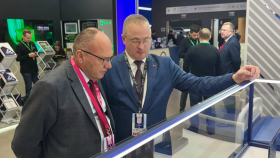
Today, July 17 , a ceremonial event was held i n Borisov to mark a significant date — the 150th anniversary of the founding of the Borisov Interdistrict Center for Hydrometeorology and Environmental Monitoring, a branch of the Minskoblhydromet of Belhydromet. This event is an important milestone not only in the history of the center itself, but also in the history of the entire hydrometeorological service of the country. The Borisov Interdistrict Center is rightfully considered one of the oldest observation posts in Belarus. It was here, on July 13, 1876, that the first water gauge rod was installed, marking the beginning of systematic monitoring of water bodies in the region. A century and a half of dedication to their work is a unique example of professionalism and enduring traditions. Among the honored guests at the event were: Alexander Ilyasevich – Deputy Chairman of the Minsk Regional Executive Committee; Dmitry Rovdo – Deputy Chairman – Head of the Department of Agriculture and Food of the Borisov District Executive Committee; Siarhei Khilman – Head of the State Institution "Republican Center for Hydrometeorology, Radioactive Contamination Control and Environmental Monitoring"; Victoria Kharitonchik – Chief Specialist of the Borisov District Inspectorate of the Minsk Regional Committee for Natural Resources and Environmental Protection; Viktor Isaev – Deputy Head of the Traffic Police Department of the Borisov District Police Department, Police Major; Alexander Avramchik – Deputy Head of the Borisov City and District Emergency Situations Department of the Institution "Minsk Regional Directorate of the Ministry of Emergency Situations"; Vitaly Goravsky – Director of the Belgosstrakh Representative Office for Borisov District. During the celebratory event, the Director of Belhydromet, Sergey Khilman, addressed the veterans and the current staff with a welcoming speech. He emphasized the special significance of the center's work in the modern world. "Your daily work requires not only deep professional knowledge, but also a high degree of responsibility, composure, and the ability to operate in any, sometimes the most challenging, conditions. It is you who ensure the accuracy and timeliness of the data, on which the safety and well-being of people directly depend," Siarhei Khilman stressed. For their high professionalism and conscientious work, the center's employees were awarded well-deserved honors. The management recognized those who, through their diligent efforts, strengthen the reputation of the hydrometeorological service and make a significant personal contribution to the development of hydrometeorological support for the region. The ceremonial event concluded with a wreath-laying ceremony at the memorial complex "To the Victims of Fascism." Bowing their heads, those gathered paid tribute to the memory of those who perished in the Great Patriotic War, including hydrometeorological service workers who gave their lives for the peace and tranquility of our Motherland.
17.07.2026
Safeguarding environmental security: BNTU students complete internship at Belhydromet
From July 6 to July 17, 2026 , within the framework of an agreement on joint activities to organize the work of a branch of t he Department of Engineering Ecology at the Faculty of Mining and Engineering Ecology of the Belarusian National Technical University (BNTU) based at Belhydromet, a practical internship was held for 1st-year students specializing in "Environmental Audit and Environmental Quality Assurance." The main goal of the internship was to deepen students' theoretical knowledge and equip them with practical skills in the field of ecology and environmental protection. During the internship, students were engaged in various structural divisions of Belhydromet, where, under the guidance of experienced specialists, they carried out a number of practical tasks. Special attention was paid to working with modern analytical equipment, processing the data obtained, and compiling reporting documentation. A significant portion of the time was devoted to familiarizing themselves with the work of laboratories where air, water, and soil samples are analyzed. Students learned about modern methods for determining pollution levels, the operating principles of dosimetric and radiometric equipment, and the importance of adhering to quality standards when taking measurements. Conducting such an internship at Belhydromet is an important step in shaping future environmental specialists. It is not only an opportunity to apply the knowledge gained at university in practice but also a chance to immerse themselves in the atmosphere of real professional activity and see how state agencies responsible for the country's environmental security operate. The successful completion of the internship underscores the importance of continued cooperation between BNTU and Belhydromet. Further development of educational programs and expansion of collaboration areas are planned, which will enable the training of highly qualified specialists capable of addressing pressing environmental challenges and contributing to the sustainable development of the Republic of Belarus.
16.07.2026
In Grodno, the memory of the heroes of liberation was honored
Today, July 16, Grodno marks one of the most important dates in its history – the 82nd anniversary of the city's liberation from the Nazi German invaders . Traditionally, commemorative events were held in the city, aimed at preserving the bond between generations and reminding us of the price of the Great Victory, of the courage and selflessness of those who fought for the freedom of their native land. As part of a working visit to the Grodnooblgidromet branch, Viktoryia Nevadnichaya , Deputy Head for Ideological Work of Belhydromet, together with the branch's staff, took part in a rally and a flower-laying ceremony at the monument to Soviet soldiers and partisans in Zhiliber Park. Those gathered honored the fallen with a minute of silence, and the flowers laid at the foot of the monument became a symbol of living memory and deep gratitude of the descendants. After the official part, the participants headed to the mobile exhibition of the Belarusian Museum of the History of the Great Patriotic War to delve even deeper into the pages of the past. The museum exhibits allow visitors to see the war not only as dates and facts, but also as the fates of people, their courage and selflessness.
15.07.2026
Belhydromet hosted a Unified Information Day on life safety issues
Today, July 15 , Belhydromet held a Unified Information Day on the topic "Ensuring life safety: from cyberattacks to road safety rules". The meeting of the workforce with representatives of law enforcement agencies and emergency authorities was devoted to the key aspects of personal, digital and public safety of citizens. First to address the audience was Mikhail Voytetsky , Deputy Head of the Pervomaisky District Emergency Department. He focused in detail on fire safety issues both in the workplace and at home. Special attention was paid to the algorithms of actions in the event of emergencies. He reminded of the importance of maintaining autonomous fire detectors in good working order, and also outlined the rules for safe behaviour near water bodies and in forests during the summer season. The topic of road traffic safety was covered by Evgeny Zhurikho , Senior State Traffic Inspector of the Traffic Police Department of the Main Internal Affairs Directorate of the Minsk City Executive Committee. Evgeny Leonidovich familiarised the staff with the accident statistics in the capital and reminded of the need for strict compliance with the Road Traffic Rules by all road users – both drivers and pedestrians. Special emphasis was placed on the rules for using personal mobility devices (electric scooters, gyroscooters) and on the issues of child road traffic injuries during the summer holidays. As visual aids, short videos analysing typical traffic situations were shown to the participants. Issues of protection against modern digital threats were covered by Nazar Bukshta , Senior Operative for Particularly Important Cases of the Cybercrime Counteraction Division of the Criminal Police of the Pervomaisky District Administration of Minsk. Nazar Gennadievich examined in detail the most common schemes of Internet fraud, including phishing, vishing, as well as theft of funds from bank cards. The officer cited real-life examples from his practice and gave practical recommendations on ensuring cybersecurity, protecting personal data, and safeguarding accounts in messengers and social networks from unauthorised access. The rules for the safe use of online banking and signs of suspicious messages were also reviewed separately. The event continued in the format of an active dialogue. Belhydromet employees had the opportunity to ask the invited guests questions of concern and receive competent, comprehensive answers with references to legislation and practical examples. We thank the representatives of the agencies for their participation and valuable contribution to improving the level of safety culture in our team.
1 2 3 4 5 6 7 8 9 10 [11..20]

Specialized sites

Pogoda.by Rad.org.by nsmos.by

Informational resources

000120_eb96852ad10b0f40634fc2ac807a208a_work.jpg State Symbols of the Republic of Belarus 000120_cffd213c635e16631680b72b64785b72_work.jpg The National Legal Internet Portal of the Republic of Belarus 000120_8c3bdf6e7574e3150a94810421a74e17_work.jpg The Ministry of Natural Resources and Environmental Protection of the Republic of Belarus 000120_e961c7bafa7862b6ec792000d417d43c_work.jpg The Official Internet Portal of the President of the Republic of Belarus 000120_d4ccbc92a75822a04d9443d206470042_work.jpg The Portal for Rating Assessment of the Quality of Services Provided by Organizations in the Republic of Belarus 000120_60625fb4d7255be81a7d6a4f54391049_work.jpg The CIS Interstate Council for Hydrometeorology (CIS ICH) 000120_2cf03b5ed9cfd948ec67d2edb868ce8b_work.jpg Information Analysis Portal of the Union State 000120_e42220828207561fd3ae263681478868_work.jpg The Union State Committee on Hydrometeorology and Environmental Contamination Monitoring 000120_a48c08245f74d0ff95dbd0e558f8b0be_work.jpg The Internet Portal "The Youth of Belarus"
Cookies are used to ensure the user-friendliness of the site

More details
Accept
Decline

About us

  • Structure
  • History
  • Periodicals

Activities

  • Agrohydrometeorology
  • Radiation and Ecology
  • Aviation weather reports
  • Scientific activity

Services

  • Requisites

Press center

  • News and events

Contacts

  • Address: 110, Nezavisimosti Avenue, Minsk, 220114
  • Phone:  +375 17 373-22-31
  • E-mail: kanc@hmc.by
  • Opening hours:
  • Monday-Friday:
    9.00-18.00
  • Days off: Saturday, Sunday
  • x ok facebook

© Belhydromet, 2016-2026