


Fogs in Belarus
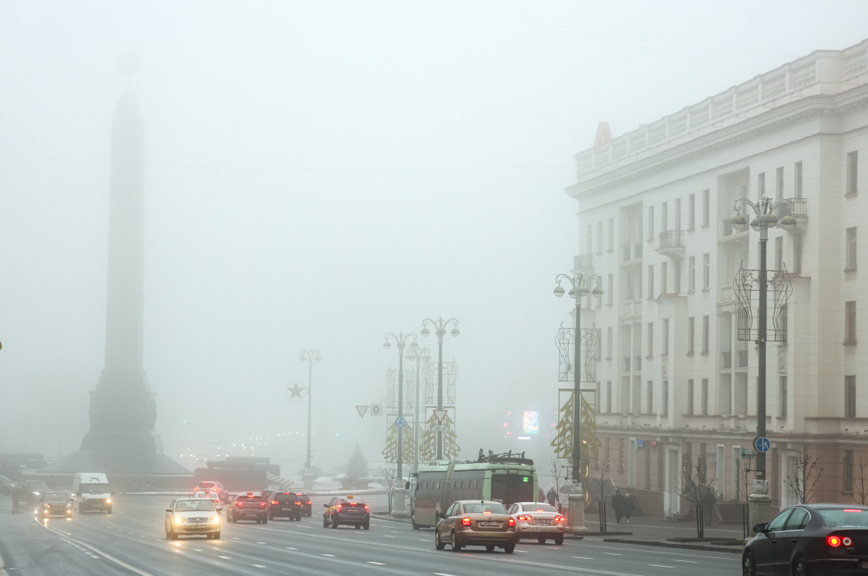
In autumn, one can often observe such a common phenomenon as fog.
Fog is an accumulation in the air of very fine water droplets (in liquid or frozen state), leading to a reduction in meteorological visibility range to 1000 m or less. The formation of fogs is similar to the formation of clouds, when, as a result of condensation of water vapor, the rising air cools. But in the case of fogs, cooling occurs not as the air rises, but at the earth's surface.
Fogs are accompanied by a noticeable deterioration in visibility, creating unfavorable conditions for the operation of road, rail and air transport. The denser the fog that has formed, the greater the danger it poses. Fog with visibility values of 500 m or less lasting 3 hours or more is an unfavorable hydrometeorological phenomenon. Fog with a visibility value of 50 m or less lasting at least 12 hours is considered heavy. Heavy fog is a hazardous hydrometeorological phenomenon.
The average number of days with fog per year on the territory of Belarus ranges from 30 to 70, increasing from lowlands to uplands as a result of moist air masses rising along windward slopes and their transformation. In individual years, the number of days with fogs deviates significantly from the average value.
The cold season accounts for 60–80% of all days with fogs in the year. In individual years, the number of days with fog in the months of the autumn-winter period on the Novogrudok Upland reaches 25–26 (November 1958–1960), on the Minsk Upland – 20–21 days (November 1986, December 1960).
Fogs have a well-pronounced diurnal cycle, especially in the warm period of the year. They most often arise before sunrise and dissipate a few hours after sunrise. In the cold period of the year, their appearance is possible at any time of day, but more often, as in summer, they are observed before sunrise.
The types of fogs are very diverse: a distinction is made between fog consisting of droplets of liquid water (liquid-droplet fog) and fog consisting of frozen droplets or ice crystals (ice fog). Sometimes a mixed variant is observed. Ice fog forms during severe frosts and high air humidity.
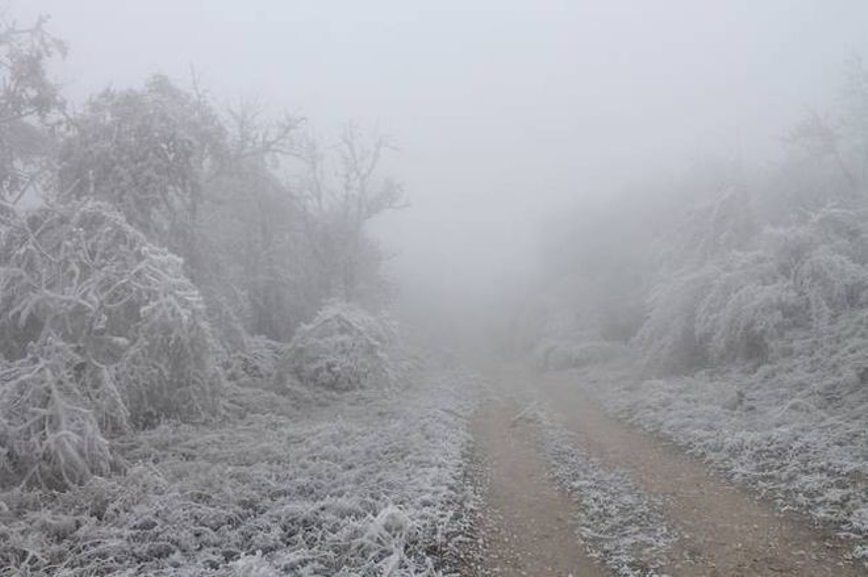
Ice fog
According to their height of propagation, fogs are divided into solid, translucent and ground fogs. Solid fog is a phenomenon in which the observer is in the fog and does not distinguish the sky. Translucent fog is fog in which a person can see clouds or clear sky, the disk of the sun or moon. Ground fog is located in a low layer, mainly over low places and over water bodies.
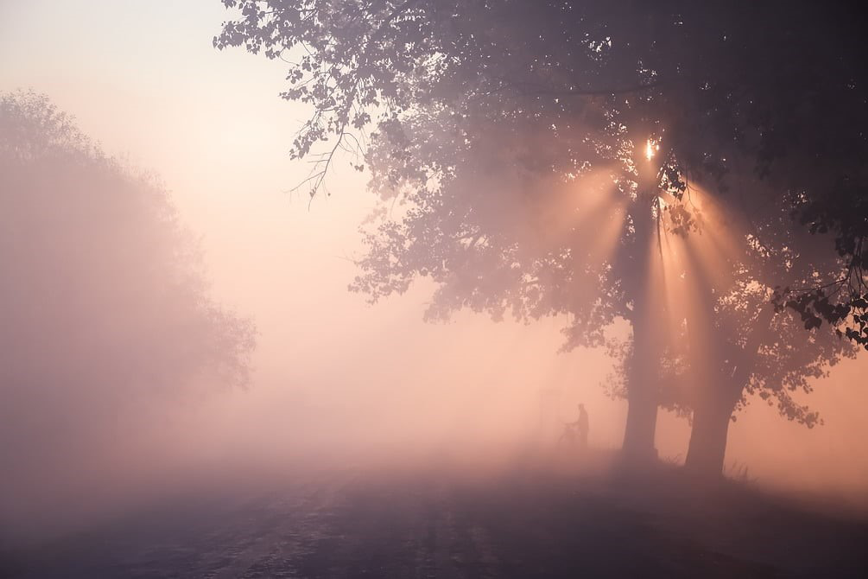
Translucent fog
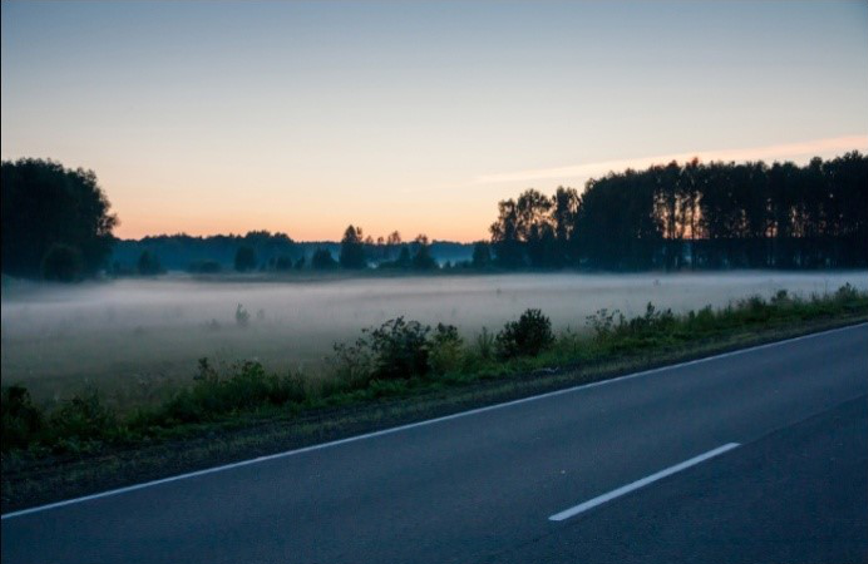
Ground fog
The main classification of fogs according to the conditions of their formation divides them into three groups: cooling fogs, evaporation fogs, mixing fogs.
Cooling fogs arise due to the cooling of air. They are divided into radiation, advective, advective-radiation and orographic. The most common in Belarus are radiation, advective and advective-radiation fogs.
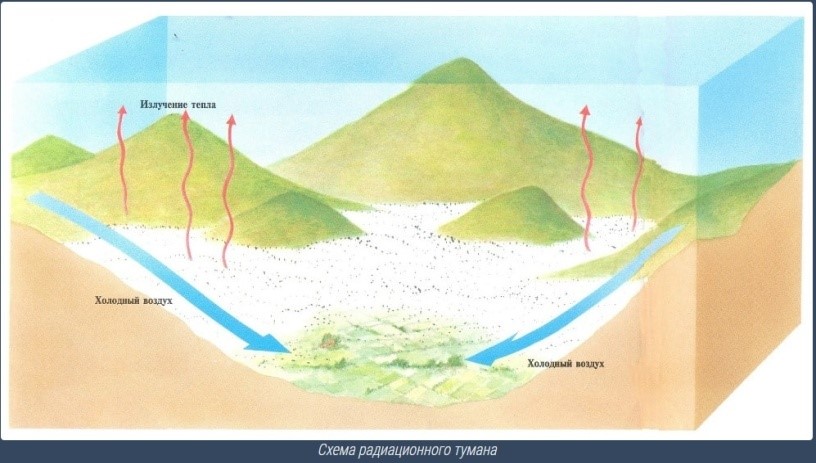
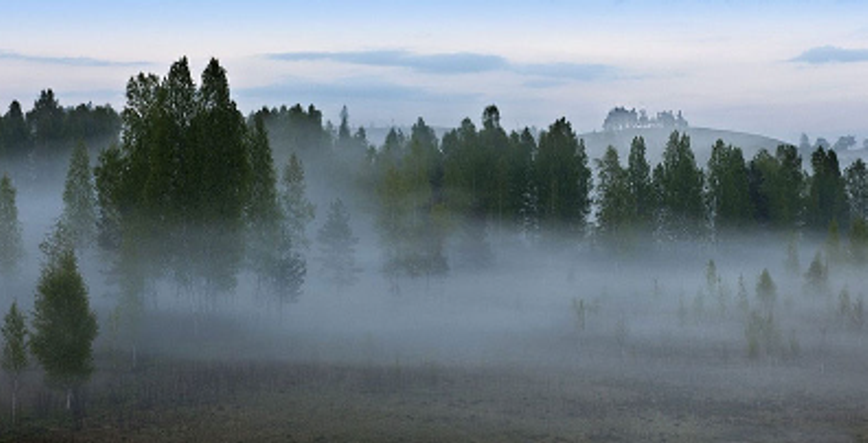
Radiation fog
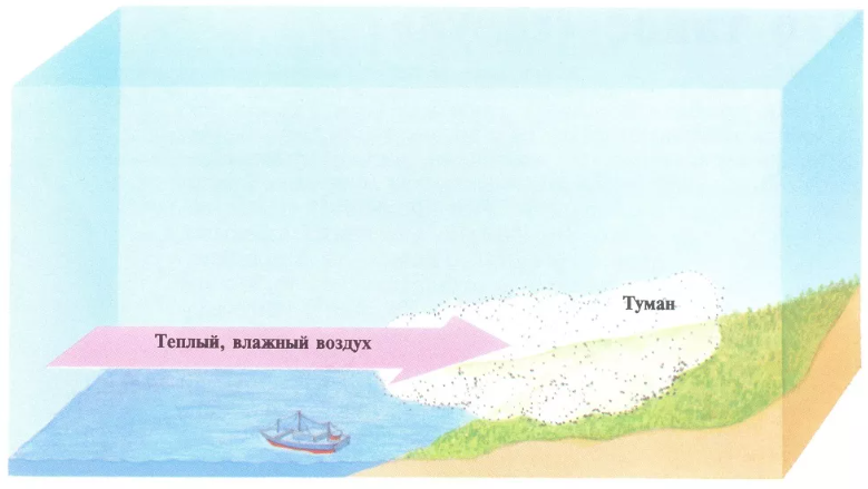
Scheme of advective fog
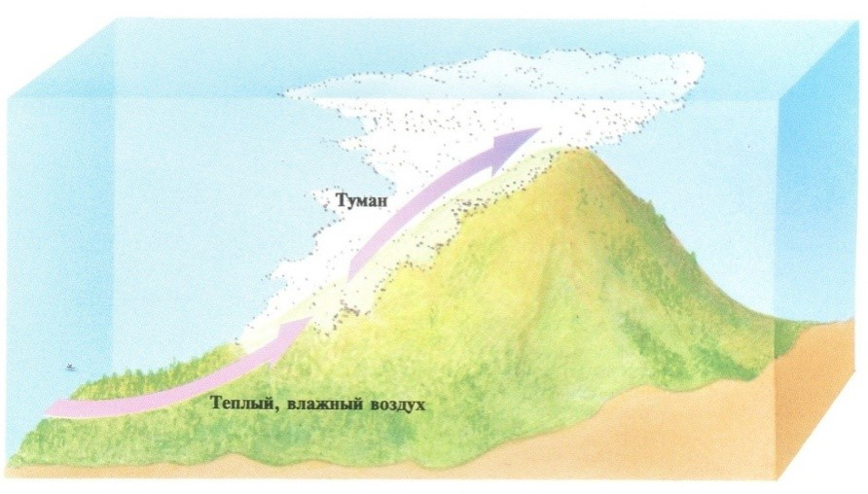
Scheme of orographic fog
Evaporation fogs form when colder air moves onto a warmer surface, intensive evaporation occurs, and excess water vapor condenses. Such fogs are often found over water bodies or after rain.
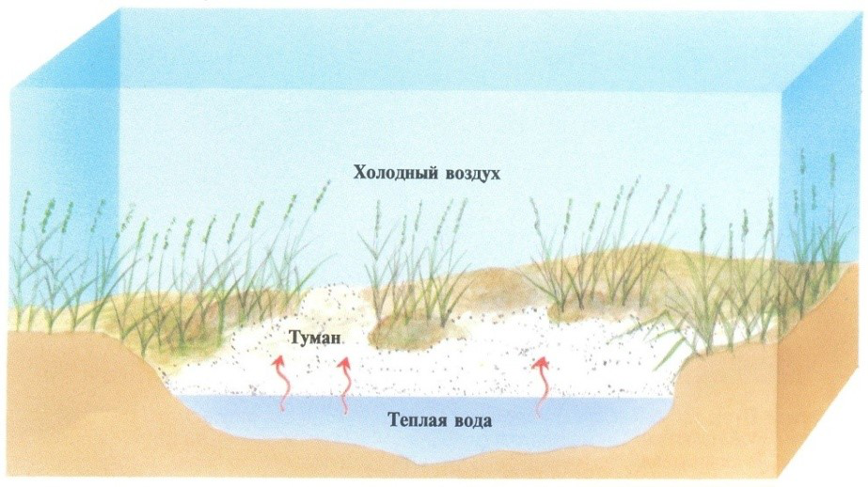
Scheme of evaporation fog
Mixing fogs form at the boundary of contact between two air masses with significantly differing temperatures and moisture content close to one hundred percent.
There are also anthropogenic fogs, the formation of which is influenced by human activity.
Meteorological extremes
The town of Novogrudok is located on an upland, and due to the predominance of western transport of air masses over the territory of our country, favorable conditions for the occurrence of fogs develop in the town. On average, 67 days with fog are observed per year in Novogrudok. The maximum number of days with fogs was recorded in 1964 and amounted to 140 days, which is also a record for our country.
For more details about fogs, see the report
When using the information a reference to Belhydromet is obligatory
Specialized sites
Informational resources
 State Symbols of the Republic of Belarus
 The National Legal Internet Portal of the Republic of Belarus
 The Ministry of Natural Resources and Environmental Protection of the Republic of Belarus
 The Official Internet Portal of the President of the Republic of Belarus
 The Portal for Rating Assessment of the Quality of Services Provided by Organizations in the Republic of Belarus
 The CIS Interstate Council for Hydrometeorology (CIS ICH)
 Information Analysis Portal of the Union State
 The Union State Committee on Hydrometeorology and Environmental Contamination Monitoring
 The Internet Portal "The Youth of Belarus"