


A press conference titled "Hydrometeorological Safety: Current Realities and Innovative Development" was held at the National Press Center of the Republic of Belarus, timed to coincide with World Meteorological Day and the Day of Workers of the Hydrometeorological Service of the Republic of Belarus. The event brought together leading specialists from Belhydromet to highlight key aspects of their activities, achievements, and future plans.
Maryna Hrytskevich, Head of the Meteorological Forecast Service of Belhydromet, emphasized in her speech the importance of atmospheric observations: "The foundation of any weather forecast, as well as warnings, is a multi-level observation system ranging from surface meteorological stations to satellite systems. And the motto of World Meteorological Day 2026 – 'Observing Today, Protecting Tomorrow' – underscores this perfectly. After all, what is happening with the atmosphere, oceans, and land here and now is not only the basis for tomorrow's weather forecast but also an invaluable source of knowledge for understanding future climate trends."

In the Republic of Belarus, ensuring hydrometeorological safety is one of the primary tasks entrusted to Belhydromet. Weather forecasts and warnings about dangerous and adverse hydrometeorological phenomena issued by Belhydromet make it possible to take preventive measures to protect life and health, safeguard the property of the population, and prevent potential damage to the country's economy. Moreover, the modern equipment in Belhydromet's arsenal allows us to successfully accomplish this task. Additionally, the development and improvement of the numerical weather prediction system for the territory of Belarus, taking into account the latest scientific and technological advances, is becoming particularly relevant for ensuring national security.
New technologies for medium-range weather forecasting based on machine learning and neural networks are being developed, which will maintain a high level of forecast and warning accuracy as well as their lead time. For better understanding of information about dangerous and adverse hydrometeorological phenomena, the system of color codes for danger levels continues to be used.
Volha Baklanova, Head of the Climate Change Study Department of the Meteorological and Climate Monitoring Service and Data Fund of Belhydromet, presented a report titled "Climate Services and Main Climate Change Trends in the Republic of Belarus." She noted that Belarus is potentially vulnerable to adverse climate changes, and therefore one of Belhydromet's priority tasks is the development of national hydrometeorological activities related to climate information and services.
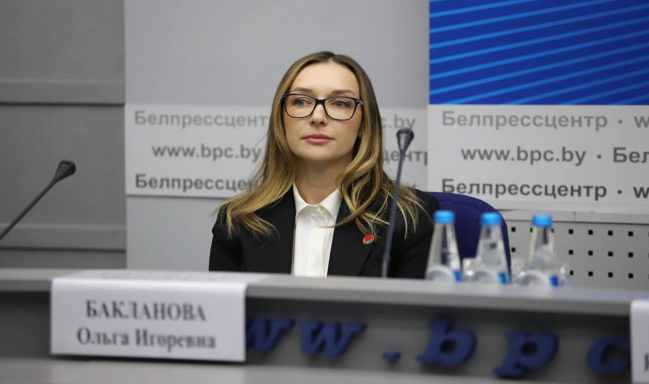
"Monitoring data of the current climate of the Republic of Belarus show that in recent years the warming trend has significantly intensified. Comparing the climate norms adopted by the World Meteorological Organization for the periods 1961–1990 and 1991–2020, it can be noted that the average annual air temperature has increased by 1.3°C," reported Volha Baklanova. At the same time, the rate of increase in surface air temperature in Belarus exceeds the global average. The increasing frequency and intensity of extreme weather events such as heatwaves, droughts, heavy rains, and hail negatively impact agriculture, forestry, infrastructure, and the economy as a whole.
To provide climate information to various economic sectors and to conduct educational outreach, Belhydromet prioritizes improving the climate change research system, obtaining more comprehensive assessments of the impact of natural and anthropogenic factors on climate, qualitatively enhancing scientific support, and developing international cooperation.
Alena Melnik, Head of the Environmental Information Service of Belhydromet, spoke about ensuring environmental safety and the information products used for monitoring the environmental situation in the country. The National Environmental Monitoring System of the Republic of Belarus includes 13 types of monitoring, of which Belhydromet carries out ambient air monitoring, radiation monitoring, surface water monitoring, and land monitoring with respect to chemical pollution.
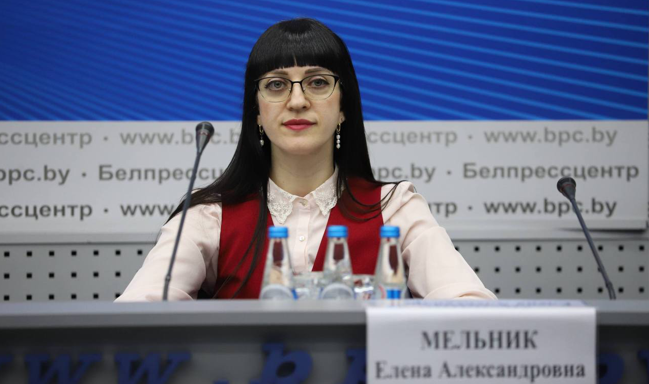
Belhydromet hosts the main information and analytical center, as well as information and analytical centers for ambient air monitoring, surface water monitoring, and radiation monitoring. "A huge volume of data flows into the information and analytical centers, where it is compiled and analyzed, and as output we obtain various environmental information," noted Alena Melnik.
Special attention was paid to ambient air monitoring. The state observation network includes 87 stationary points, 18 automatic stations, 18 gas analyzers, and 1 mobile point. Monitoring covers 26 industrial cities of the republic. Measurement results are compared with established hygienic standards, and in the event of exceedances, Belhydromet promptly informs the environmental authorities.
Information on the state of ambient air is available on the platform of the Republican Information System for Automated Environmental Monitoring (RISAMOS) and on the Belhydromet website. Belhydromet also daily forecasts ambient air quality and, when adverse meteorological conditions occur, issues warnings about expected increases in pollution.
Ekatsiaryna Istomina, Head of the Hydrology and Agrometeorology Service of Belhydromet, emphasized Belhydromet's role as the official producer of hydrometeorological information, responsible for its quality and use for safety purposes. "Reliable weather and climate information allows enterprises to choose development strategies, minimize damage from hazardous phenomena, and create safe working conditions," she noted.
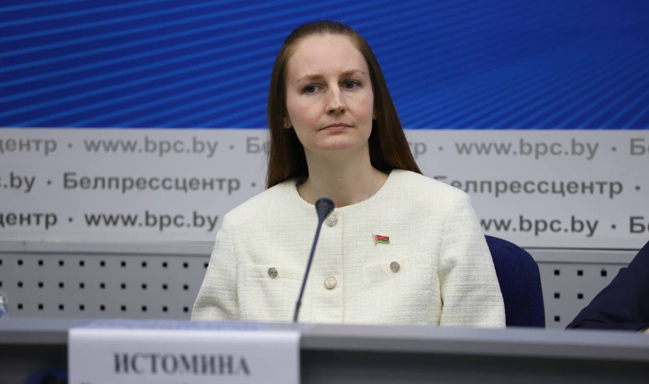
Hydrological observations, covering 112 stations across the country, serve as the basis for assessing water resources, planning water use, and protection. The results are compiled into an information data bank used for forecasts and informing government bodies and the public.
Hydrological forecasting is a critically important task that requires the development of methodologies in the context of climate change. New software systems using Earth remote sensing data will improve the quality and timeliness of forecasts, especially for transboundary water bodies.
Agrometeorological observations, carried out at 44 stations, inform the agricultural sector about prevailing hydrometeorological conditions. The relevance of these observations has increased due to climate change, necessitating adaptation strategies.
Agrometeorological forecasts, including crop yield forecasts, are key to food security. Software tools for forecasting grain crop yields using satellite data have been introduced. Pilot projects providing individual agrometeorological information to agricultural enterprises have demonstrated their practical effectiveness.
A video recording of the press conference is available at the link.
© Belhydromet, 2016-2026