

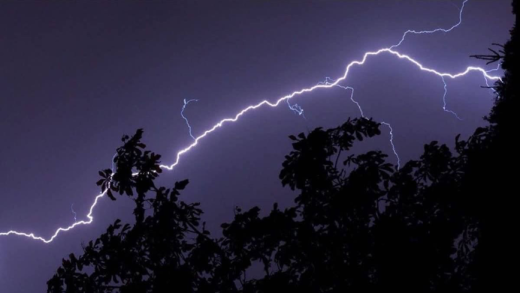
A lively debate is ongoing on social media about what happened in Minsk on the night of August 7: was it sheet lightning or a thunderstorm? Our specialists have prepared the following information for you:
A thunderstorm is an atmospheric phenomenon characterized by multiple electrical discharges between clouds or between a cloud and the ground. A thunderstorm is associated with the development of powerful cumulonimbus clouds, strong atmospheric instability, and high moisture content.
A thunderstorm consists of three main components:
- a powerful convective cloud;
- an electrical discharge in the form of a spark – lightning;
- the loud sound produced by this discharge – thunder.
A thunderstorm is a localized phenomenon.
Sheet lightning is a flash of light on the horizon caused by lightning from a distant thunderstorm. In this case, thunder is usually not heard due to the distance, but lightning flashes are visible, with their light reflecting off cumulonimbus clouds.
In temperate latitudes, this phenomenon results from the reflection of lightning flashes from cloud masses. Sheet lightning can last for several hours in a row, drawing attention with its high frequency and spectacular appearance.
The difference between the visible and audible effects is enormous: while thunderclaps fade out at a distance of 15–20 kilometers from the epicenter, the reflections of the lightning flashes themselves can be observed in the night sky at distances of up to 160 kilometers.
So what happened in Minsk on the night of August 6–7? Our meteorologists' answer: a thunderstorm.
When using the information a reference to Belhydromet is obligatory
© Belhydromet, 2016-2026