

The average air temperature across Belarus for July 2026 was +18.2 °C, which is 0.7 °C below the climatic norm. Such a cooler July (or cooler than this) during the warming period that began in the late 1980s occurs roughly once every 3 years; prior to that, it happened in more than half of all summers.
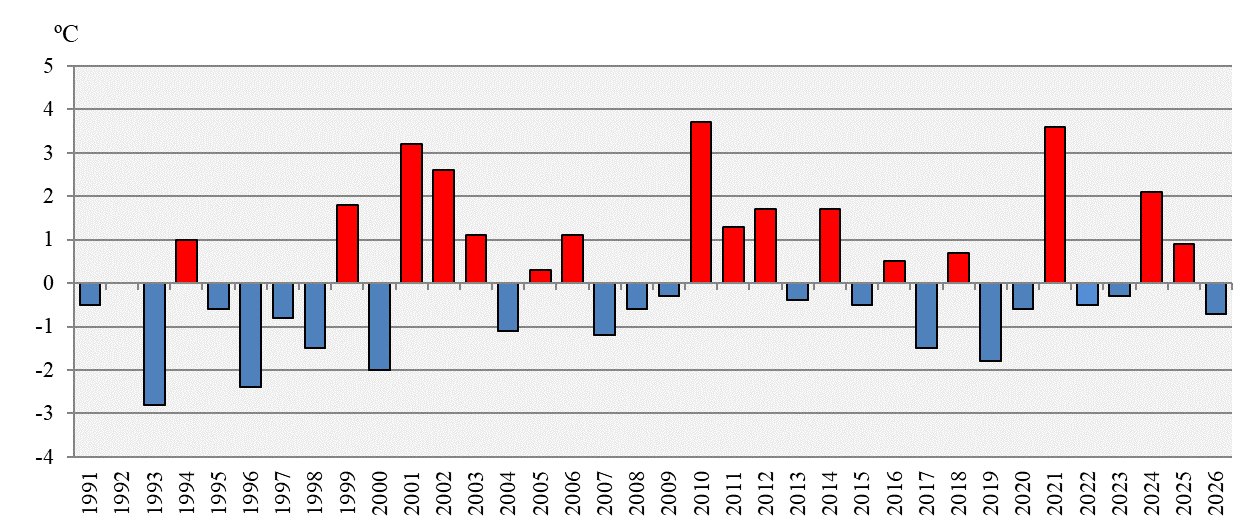
Deviation of the average July air temperature for the period 1991–2026
from the climatic norm (+18.9 °C)
The negative temperature anomaly extended across the entire territory of the country. By region, the largest negative deviations from the climatic norm were recorded in Grodno and Minsk regions (0.9 °C on average in each), while the smallest deviations were observed in Gomel Region (0.5 °C).
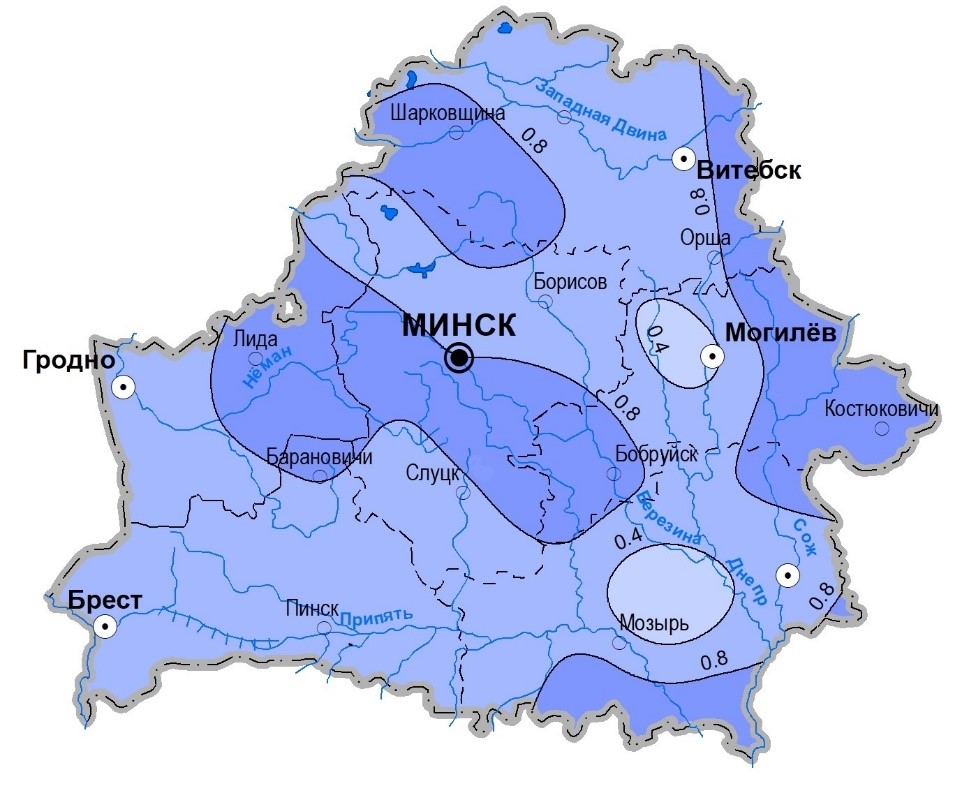
Deviation (°C) of the average July air temperature
from the climatic norm across the territory of Belarus
The temperature regime in July was uneven. The first and third decades were cool, with negative anomalies of 0.9 °C and 2.2 °C, respectively, while the second decade saw a positive anomaly of 1.0 °C.
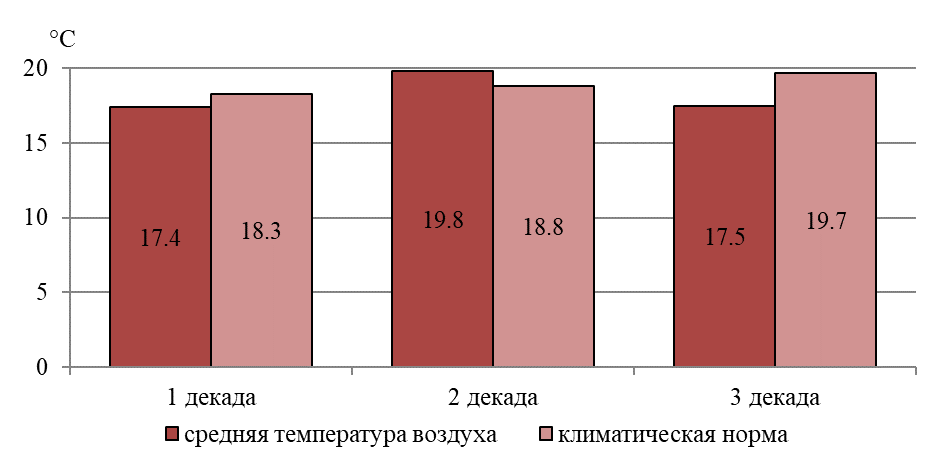
Average air temperature and climatic norm
by decades for July 2026 across the territory of Belarus
Daytime air temperatures throughout the month mainly ranged between +20 and +29 °C, rising to +30 °C and above on the hottest days. In the southwestern regions at the beginning of the month, the heat reached the threshold of a hazardous phenomenon (+35 °C and above). The maximum air temperature (+37.1 °C) was recorded on the afternoon of July 1 at the Kobrin station. At the Ivatsevichy and Pruzhany stations, the monthly maximum air temperature records were updated – +36.1 °C at both stations (previous records: +35.6 °C in 2001 at Ivatsevichy, and +36.0 °C in 1994 at Pruzhany).
Nighttime temperatures generally ranged between +11 and +17 °C, dropping to +10 °C and below on the coldest nights. The minimum temperature for the month was recorded at the Bragin station on July 18, reaching +6.0 °C.
Over the month, the average precipitation across the republic amounted to 96 mm, which is 107 % of the climatic norm. Precipitation was unevenly distributed across the country. On most of the territory, 75–130 % of the monthly norm fell.
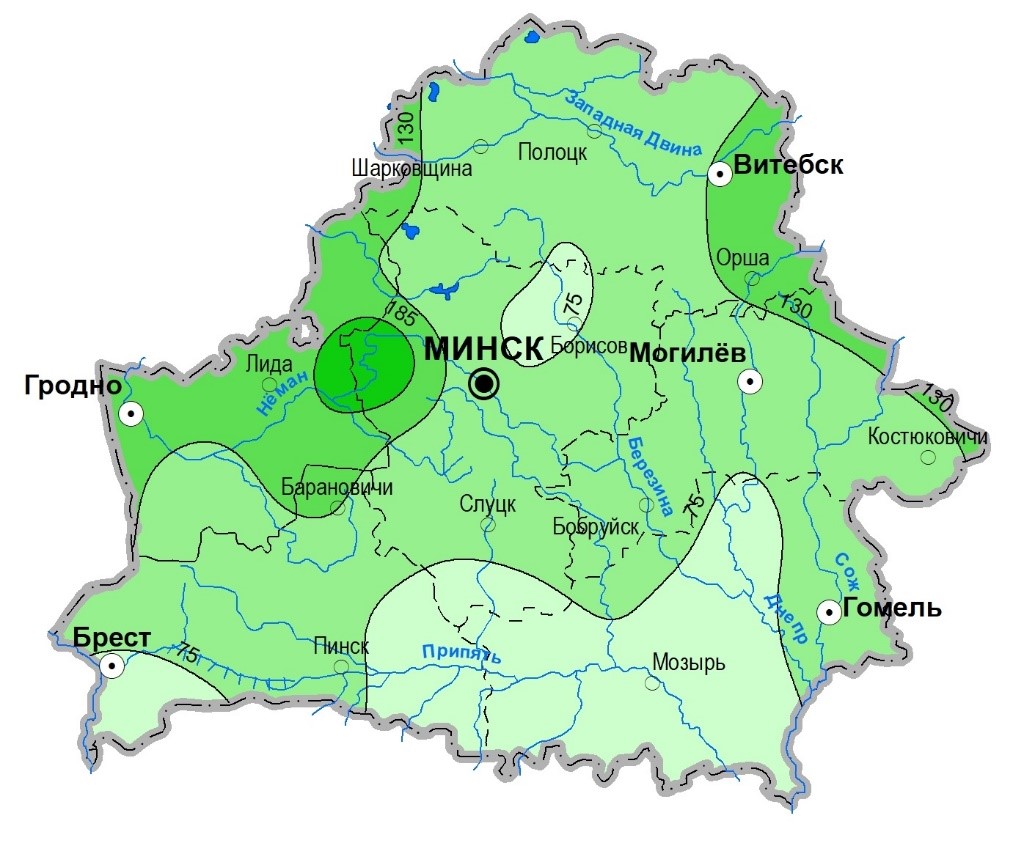
Deviation (%) of the monthly precipitation total for July
from the climatic norm across the territory of Belarus
The highest amount of precipitation fell in Grodno Region – 133 mm, or 150 % of the norm, while Gomel Region experienced a significant shortfall – 58 mm, or 59 % of the norm.
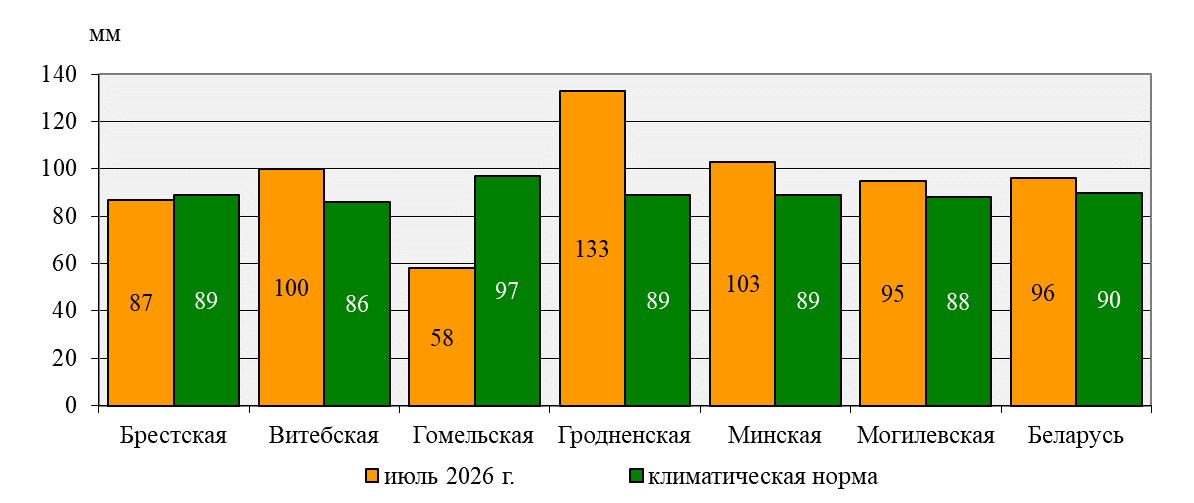
Precipitation amount for July 2026 and the climatic
norm by region and across the territory of Belarus
In the first decade of the month, there was an excess of precipitation – 159 % of the decade norm. In the second and third decades, a deficit was observed, with 86 % and 74 % of the decade norm falling, respectively.
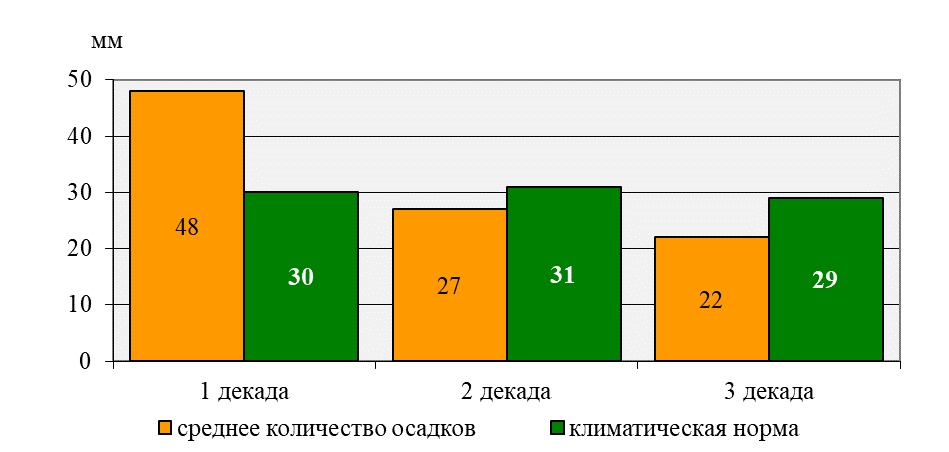
Precipitation amount and climatic norm
by decades for July 2026 across the territory of Belarus
Throughout the month, fog and thunderstorms were observed across the country, with hail up to 10 mm in diameter recorded (Lida). Rains were mostly torrential in nature, and on some days reached the threshold of hazardous hydrometeorological phenomena: on July 1, in the area of the Volozhin station, a very heavy downpour with 35 mm of precipitation was observed, and on July 11, in the area of the Gorki weather station, with 31 mm. In places, wind gusts increased to 15 m/s and more. At the Soligorsk AMS on July 13, a wind speed of 34 m/s was recorded, reaching the threshold of a hazardous hydrometeorological phenomenon (25 m/s and above).
When using the information a reference to Belhydromet is obligatory
© Belhydromet, 2016-2026